
Jusepe de Ribera: Spain’s Baroque Master of Naples and Where to See Him
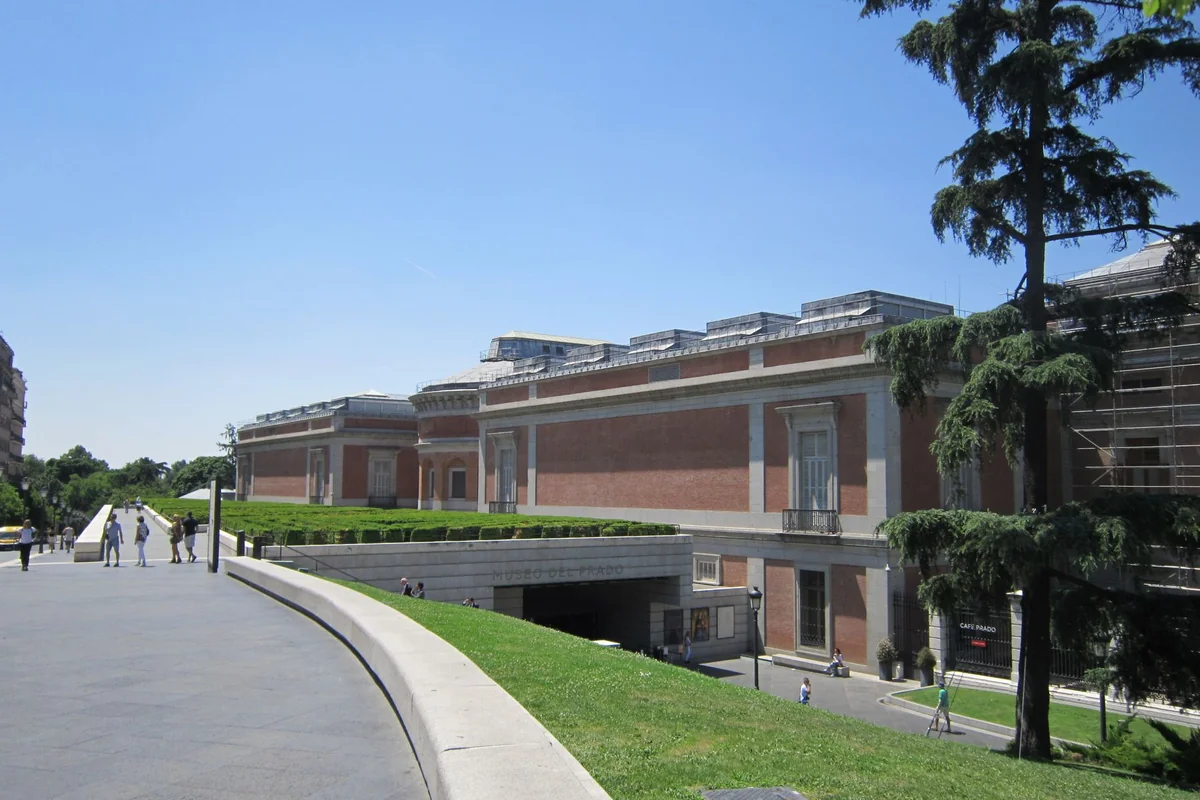
Few painters capture the drama of the Spanish Baroque as fiercely as Jusepe de Ribera. Born in Spain, trained in Italy and famous in Naples, he never came home, yet his canvases travelled to Madrid in large numbers and shaped how Spanish artists painted saints, beggars and philosophers for generations. This guide follows his life and points you to the places in Spain where you can stand in front of his work today.
From Xativa to Naples: the Life of Jusepe de Ribera
Ribera was born in Xativa, near Valencia, in 1591. Little is known for certain about his early training. What is clear is that he left Spain as a young man and headed for Italy, the place every ambitious painter of his generation wanted to be.
He is documented in Parma and then in Rome in the 1610s, where the shadow of Caravaggio still hung over every studio. The young Spaniard absorbed the hard light, the dark backgrounds and the habit of painting from real models rather than idealised types. In Rome he was already known by the nickname that followed him for the rest of his life: Lo Spagnoletto, the little Spaniard.
A Spaniard in a Spanish City
In 1616 Ribera moved to Naples, then part of the Spanish Monarchy and governed by a viceroy sent from Madrid. He married Caterina Azzolino, the daughter of a local painter, and quickly found patrons among the Spanish nobles who ran the city, starting with the Duke of Osuna.
For the next three and a half decades Naples was his base. Viceroys, churches and religious orders commissioned altarpieces, and many of the paintings bought by the viceroys were shipped back to Spain as gifts or as part of their private collections. That is the main reason why Spain, a country Ribera never returned to, holds so much of his output.
He died in Naples in 1652. By then he had shifted from the harsh contrasts of his youth towards warmer colour and softer light, partly under the influence of Venetian painting and of the Flemish and Bolognese pictures he saw in Neapolitan collections.
What Makes Ribera’s Painting So Distinctive
Stand close to a Ribera and the first thing you notice is skin. Wrinkled foreheads, cracked hands, dirty fingernails and sunburnt necks are painted with thick, almost sculptural strokes. He used real people from the streets of Naples as models for apostles and philosophers, and he did not flatter them.
Light, Darkness and Texture
His early work follows the tenebrist formula: a figure lit by a strong beam against a nearly black background. What sets Ribera apart from many followers of Caravaggio is the way he builds up paint so that the surface itself feels rough where the skin is old and smooth where it is young.
Martyrdom Without Euphemism
Ribera is also remembered for scenes of suffering. Flayings, crucifixions and punishments from classical myth are shown without softening. In the Counter-Reformation world a painting had to move the faithful, and few painters moved them as directly as he did. He was also a superb draughtsman, and his etchings spread his style across Europe.
Where to See Ribera’s Work in Spain
Because so many of his canvases were sent to Spain in the seventeenth century, you do not need to travel to Naples to understand him. A good itinerary starts in Madrid and can be extended to Castile and Andalusia.
Museo del Prado, Madrid
The Prado holds the most important group of paintings by Ribera anywhere in the world, a legacy of the Spanish royal collection. A few works are essential.
- The Martyrdom of Saint Philip (1639): long thought to show Saint Bartholomew, it captures the moment the saint is hoisted up by his executioners, with a crowd of ordinary Neapolitan faces looking on.
- Jacob’s Dream (1639): a quiet, luminous picture of the sleeping patriarch, with the heavenly vision suggested only by a band of golden light.
- Archimedes (1630): the ancient mathematician painted as a grinning, ragged old man holding his papers, one of Ribera’s famous series of beggar philosophers.
- Tityus and Ixion (1632): two huge canvases from a series of mythological punishments, sometimes called the Furies, which show how far he pushed the drama of the nude figure.
- The Holy Trinity (c. 1635): an image of God the Father holding the dead Christ, where the pale body of Christ glows against the dark.
Plan at least an hour for the Ribera rooms alone, and then walk over to see how his heirs responded. Velazquez visited Naples in 1630 and is thought to have met him there, and the Prado lets you compare their approaches within a few rooms. If you are building a whole day around the museum district, our one-day guide to the Paseo del Arte in Madrid helps you fit the Prado alongside the Thyssen and the Reina Sofia.
El Escorial
The royal monastery of San Lorenzo de El Escorial, about an hour from Madrid, houses paintings acquired by the Spanish Crown, among them Ribera’s Jacob with the Flock of Laban (1632).
Salamanca: the Immaculate Conception
In Salamanca, the church of the Agustinas Recoletas (known locally as the Purisima) keeps one of Ribera’s grandest late commissions, a large Immaculate Conception painted in 1635 for the Count of Monterrey, viceroy of Naples, who founded the convent.
Osuna: Paintings for a Patron
The Collegiate Church of Osuna, in the province of Seville, preserves a group of paintings by Ribera linked to the Dukes of Osuna, his first great patrons in Naples. Among them is a dramatic Crucifixion.
Ribera and the Spanish Golden Age
It is easy to think of Ribera as an Italian painter with a Spanish birth certificate, but his influence on Spanish art was enormous. His paintings arrived in Madrid at exactly the moment when a new generation was forming, and his naturalism, his attention to texture and his ascetic saints became part of the visual language of the Golden Age.
Compare his weathered apostles with the monks painted in Seville in the same decades and you will see a shared world of piety and sober realism. Our profile of Francisco de Zurbaran, the Spanish Golden Age painter of monks and still lifes is a natural next read if you want to follow that thread.
Tips for Visiting
- Start with the Prado. It gives you the widest overview and the best context for everything else.
- Check church opening times. In Salamanca and Osuna the paintings are in working religious buildings, so hours can be limited and may change around services and holidays.
- Combine artists. A Ribera trail fits naturally with Velazquez and Zurbaran, and with the wider story of Spanish and Neapolitan painting under the Habsburgs.
Why Ribera Still Matters
Jusepe de Ribera painted ordinary people as if they were saints and saints as if they were ordinary people. That mix of humanity and drama is what keeps visitors rooted in front of his canvases four centuries later. Whether you meet him first in the Prado or in a quiet church in Salamanca, he is one of the painters who best explains why Spanish Baroque art still feels so alive.