
All Saints’ Day in Spain: Todos los Santos Traditions, Sweets and Don Juan Tenorio in 2026
On 1 November, Spain slows down to remember its dead. All Saints’ Day in Spain, known as the Dia de Todos los Santos, is a national public holiday when families visit cemeteries, bring flowers to the graves of their relatives and share seasonal sweets. In theatres and town squares, it is also the time of year for Don Juan Tenorio, the nineteenth-century play that Spaniards have long associated with these nights.
Here is how the day is marked, what people eat, and where to see Don Juan Tenorio in 2026.
What Is the Dia de Todos los Santos?
All Saints’ Day is a Christian feast honouring all the saints of the Church. In Spain, as in much of Catholic Europe, it has become above all a day for remembering family members who have died. It is followed on 2 November by All Souls’ Day, the Dia de los Difuntos, which is the Church’s day of prayer for the dead. In practice, most families make their visit on the 1st, because it is the public holiday.
In 2026, 1 November falls on a Sunday. Regional holiday calendars in Spain sometimes move a holiday that lands on a Sunday to the following Monday, so if you are travelling, check the calendar for the region you are visiting.
A Day at the Cemetery
For most families, All Saints’ Day in Spain begins at the cemetery. The most widespread tradition is a family visit to the local cemetery. In the days before the holiday, people clean and tidy the graves and niches of their relatives, and on the day itself they bring fresh flowers. Chrysanthemums are the classic choice, and flower stalls appear outside cemeteries all over the country. Many parishes celebrate Mass in or near the cemetery, and roads around the larger ones can be busy throughout the day.
Spanish cemeteries are often remarkable places in their own right, with family chapels, carved angels and monuments that make them open-air galleries of funerary art. If you enjoy that side of Spanish heritage, our guide to famous Spanish sculptures is a good companion read.
Visitors should remember that this is a private, emotional day for local families. If you visit a cemetery, dress respectfully, keep your voice down and avoid photographing people at graves.
Sweets and Seasonal Food
Like most Spanish holidays, Todos los Santos has its own treats, and bakeries fill their windows with them from late October.
Huesos de santo
Saints’ bones are small rolls of marzipan shaped to look like bones and traditionally filled with a sweet egg-yolk cream. Today you will also find versions filled with chocolate, coconut, praline and other flavours. You will find them in bakeries all over Spain in the weeks around the holiday.
Bunuelos de viento
Wind fritters are light, airy puffs of fried dough, often filled with cream, custard or chocolate. They are one of the signature sweets of the season.
Chestnuts and panellets in Catalonia
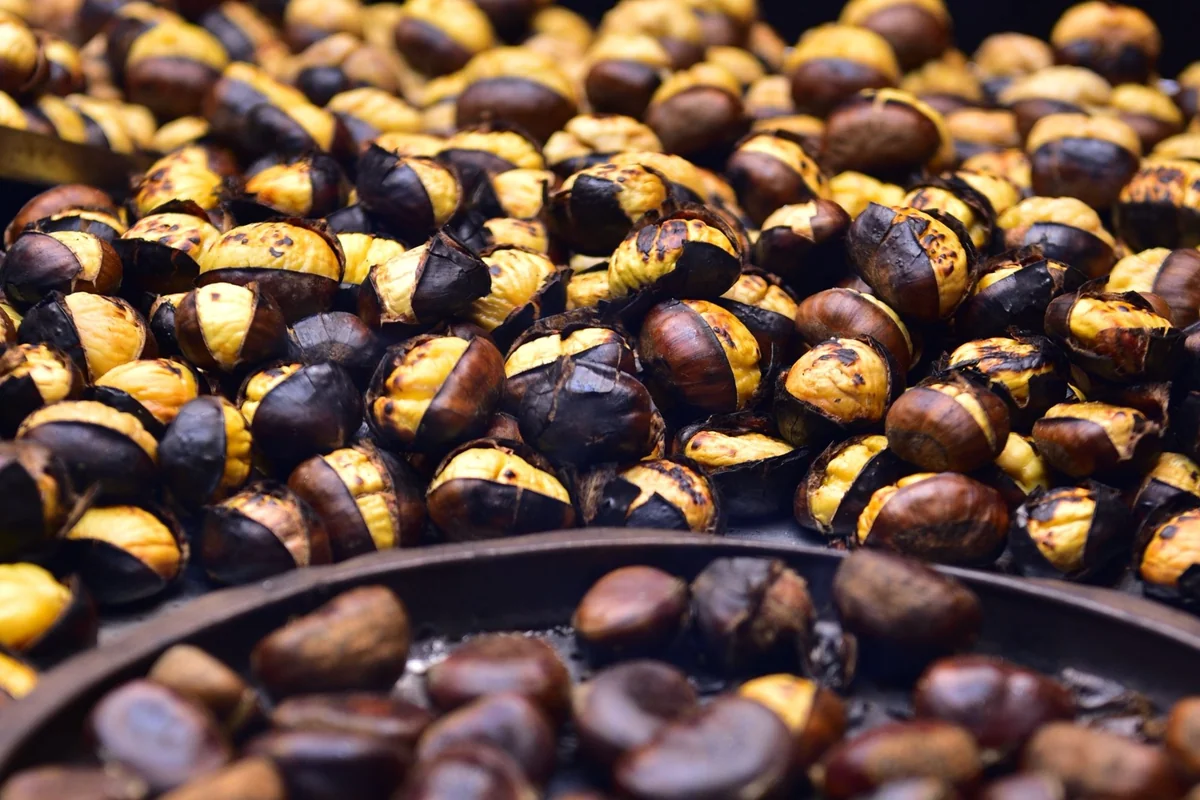
In Catalonia the holiday is linked to the Castanyada, a celebration of roasted chestnuts. Families also eat panellets, small marzipan balls traditionally coated with pine nuts, along with roasted sweet potatoes. In autumn, street vendors roasting chestnuts are a familiar sight in many Spanish cities.
Don Juan Tenorio: The Play of All Saints’ Night
Don Juan Tenorio was written by the poet and playwright Jose Zorrilla and first staged in Madrid in 1844. It retells the legend of Don Juan, the reckless seducer who had already appeared in earlier Spanish drama, but gives it a very different ending.
A story of seduction, death and redemption
In the first part, Don Juan makes a cruel bet, mocks the people around him and wins the heart of the novice Dona Ines. In the second part, years later, he returns to Seville and finds a pantheon filled with the tombs of those he wronged, including Dona Ines. The ghosts and statues come to life on the night of All Saints. Instead of being dragged to hell, as in older versions of the story, Don Juan is saved at the last moment by the love of Dona Ines.
Because the second part unfolds around the night of All Saints, theatre companies across Spain have long staged the play at this time of year. Many Spaniards know its famous verses by heart.
Where to see Don Juan Tenorio in 2026
The best-known open-air production is Don Juan en Alcala, in Alcala de Henares, the university city and UNESCO World Heritage Site just east of Madrid. In 2026 it reaches its 40th edition and is declared a Festival of National Tourist Interest. According to the city’s programme, the performances take place on Saturday 31 October and Sunday 1 November at 19:30, in the Huerta del Obispo, the walled grounds of the Archbishop’s Palace. Entry is free until the space is full, so arrive early. This year’s production is by ZOE Theatre, directed by Triana Lorite, and promises a musical, visual staging inspired by magical realism.
Spain’s official tourism site explains more about the event on its page for Don Juan in Alcala de Henares. The city also calls 31 October the Night of Don Juan, with activities in its historic streets.
In Seville, where the play is set, the city’s tourism board notes that performances of Don Juan Tenorio have become a tradition in the San Fernando cemetery around All Saints. Many theatres in Madrid and other cities also programme the play in late October and early November, so check local listings.
Halloween and Todos los Santos
Halloween on 31 October has become popular in Spain over recent decades, especially among children and young people, and many towns now host costume parties and themed events. For most families, though, the heart of the season is still the quiet visit to the cemetery and the shared plate of huesos de santo. The two traditions now sit side by side, one playful and one reflective.
Tips for Travellers
- Expect closures. As a national holiday, 1 November means many shops, banks and offices close. Restaurants in tourist areas usually stay open.
- Book transport early. Many Spaniards travel home to visit family graves, so trains and roads are busy around the long weekend.
- Visit a bakery. Buying a small box of huesos de santo or bunuelos de viento is the easiest way to join in.
- See the play outdoors. Don Juan en Alcala is free and only a short train ride from Madrid, making it a memorable evening.
Frequently Asked Questions
Is All Saints’ Day a public holiday in Spain?
Yes. The Dia de Todos los Santos on 1 November is a national public holiday in Spain. In 2026 it falls on a Sunday, so check regional calendars for any change to the day off.
What do Spanish people eat on All Saints’ Day?
Typical treats include huesos de santo, marzipan rolls with a sweet filling, and bunuelos de viento, light fried fritters. In Catalonia people eat roasted chestnuts, sweet potatoes and panellets.
Why is Don Juan Tenorio performed around 1 November?
Jose Zorrilla’s play, first staged in 1844, sets its dramatic second part on the night of All Saints, so companies traditionally perform it at this time of year.
When is Don Juan en Alcala 2026?
The 40th edition takes place on 31 October and 1 November 2026 at 19:30 in the Huerta del Obispo in Alcala de Henares, with free entry until full.
1 thought on “All Saints’ Day in Spain: Todos los Santos Traditions, Sweets and Don Juan Tenorio in 2026”