
Guernica at the Museo Reina Sofia: The Story Behind Picasso’s Anti-War Masterpiece
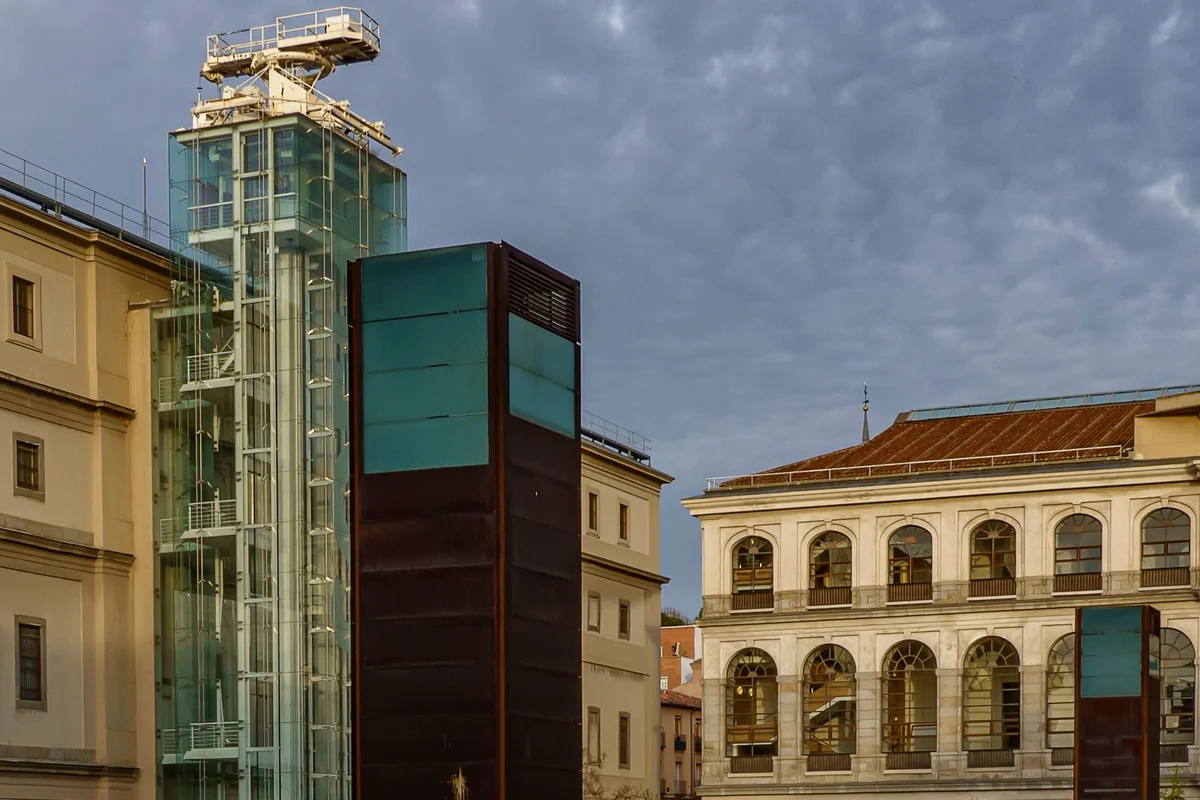
Few paintings carry as much history on a single canvas as Picasso’s Guernica. More than seven metres wide and painted only in black, white and greys, it hangs today in the Museo Reina Sofia in Madrid. Every day crowds gather in front of it, often in silence. To understand Guernica at the Reina Sofia, it helps to know how it was made, what it shows and the long road it travelled before reaching Spain.
This guide covers the bombing that inspired it, the five weeks in which Picasso painted it, its decades of exile and practical tips for seeing it in person.
The Bombing That Started It All
Gernika (Guernica in Spanish) is a small Basque town that holds deep symbolic value for the Basque people. On 26 April 1937, during the Spanish Civil War, it was bombed from the air by the German Condor Legion, with support from Italian aircraft, acting for Franco’s Nationalist side. The attack lasted for hours, and much of the town centre was destroyed by fire. The exact number of victims is still debated by historians.
News of the attack spread across Europe within days. In Paris, Picasso saw the dramatic photographs published in newspapers, including the French daily L’Humanite. According to the Reina Sofia, that coverage was his trigger for the painting.
A Commission for the 1937 Paris Exposition
Earlier that year, the government of the Spanish Republic had asked Picasso, by then one of the most famous living artists, to create a large work for its pavilion at the International Exposition in Paris. The pavilion, designed by architects Josep Lluis Sert and Luis Lacasa, was meant to show the world the Republic’s cause and its culture.
For months Picasso struggled to find a subject. The bombing gave him one. He began work on 1 May 1937 and, according to the museum, finished the canvas on 4 June, painting it in his studio on the Rue des Grands-Augustins in Paris.
Painting in Stages
Picasso made dozens of preparatory drawings and studies. His companion, the photographer Dora Maar, photographed the canvas at several stages, creating a rare record of how a masterpiece took shape. Her images show figures being moved, removed and reworked. The raised fist that appears in early versions, for example, later disappears.
What Guernica Shows
Guernica is an oil painting on canvas measuring 349.3 by 776.6 centimetres. The museum describes it as a complex late-Cubist and Surrealist work that also draws on the great tradition of Western history painting, with echoes of Rubens, Delacroix, David and Goya.
Oddly, it shows no planes, no bombs and nothing that identifies the town. As the Reina Sofia points out, the painting does not refer to a specific event at all. It is a general cry against the cruelty and terror of war.
The Main Figures
- The bull: standing on the left, calm and staring out. Picasso refused to give it a fixed meaning.
- The mother with her dead child: she wails beneath the bull, a modern version of the Pieta.
- The wounded horse: at the centre, pierced and screaming, often read as the suffering of the people.
- The fallen soldier: lying broken at the bottom, still holding a shattered sword and a small flower.
- The woman with the lamp: leaning through a window as if trying to shed light on the scene.
- The burning figure: on the far right, arms raised to the sky as a building burns.
- The light bulb: a harsh, eye-like lamp at the top of the scene.
Why Black and White?
The museum notes that the wide format and the grey, black and white palette recall cinema and press photography. The effect is like a giant newspaper page or poster. That choice helps explain why the image still feels urgent nearly ninety years later. Its closest relative in Picasso’s own work is the 1935 etching Minotauromachy, which already contains several of the same symbols.
Exile: Guernica’s Journey Back to Spain
After the Paris Exposition closed, Guernica toured to raise awareness and funds for the Republican cause, including showings in Scandinavia and Britain, before crossing to the United States in 1939. When the Second World War broke out, Picasso decided the painting should remain at the Museum of Modern Art in New York for safekeeping.
Picasso made his wishes clear. In 1958 he extended the loan to MoMA indefinitely, until democracy was restored in Spain. Franco died in 1975, and Spain adopted a new democratic constitution in 1978. Picasso had died in 1973, so the return took years of negotiation.
- 1937: painted in Paris and shown in the Spanish Republic’s pavilion.
- 1939: sent to the United States and placed in MoMA’s care.
- 1981: returned to Spain and displayed in the Cason del Buen Retiro, part of the Prado, behind protective glass.
- 1992: moved to the newly created Museo Nacional Centro de Arte Reina Sofia, where it has stayed.
The 1992 move followed a reorganisation of the national collections. Under a 1995 decree, Picasso’s birth year, 1881, became the dividing line between the Prado and the Reina Sofia. That is why Goya, whose late work Picasso admired, hangs in the Prado. If you want to see how Goya treated similar themes of violence and fear, read our guide to Goya’s Black Paintings at the Prado.
Why Guernica Still Matters
Guernica became one of the best-known anti-war images of the twentieth century. Copies, posters and tapestry versions have appeared in protests, classrooms and public buildings worldwide. The painting is now considered too fragile to travel, and the museum has kept it in Madrid despite repeated requests for loans.
Today the Reina Sofia uses Guernica as the centre of its collection, placing it in dialogue with the works and documents around it. Studies and documents linked to the 1937 pavilion are often shown nearby, which helps visitors read the painting in context.
How to See Guernica at the Reina Sofia
Guernica is on display in the Sabatini Building, the museum’s historic main building on Calle Santa Isabel. The museum’s collection page currently lists it in Room 205.10. Because the collection is being rearranged until 2028, room numbers can change, so check the official Reina Sofia page for Guernica before you go.
Opening Hours and Tickets
At the time of writing, the main site follows this schedule:
- Hours: Monday and Wednesday to Saturday 10:00-21:00, Sunday 10:00-14:30. Closed on Tuesdays.
- General admission: 12 euros, covering the collection and temporary exhibitions.
- Free entry: Monday and Wednesday to Saturday 19:00-21:00 and Sunday 12:30-14:30, for individual visitors. You still need a free ticket, which you can book online.
- Free days: include 18 April, 18 May, 12 October and 6 December.
- Closed: several holidays, including 1 and 6 January, 1 May and 24, 25 and 31 December.
Tips for a Better Visit
- Come at opening time on a weekday for the quietest view. Free evening hours can be crowded.
- If you already have an online ticket, the museum recommends entering through the Nouvel Building on Ronda de Atocha.
- Large bags and backpacks are not allowed in the galleries, so pack light.
- If the preparatory studies or Dora Maar’s photographs are on show nearby, spend time with them. They make the final work easier to read.
- The museum sits next to Atocha station, a short walk from the Prado, so both can fit into one day.
Frequently Asked Questions
Where is Guernica displayed?
Guernica is in the Museo Nacional Centro de Arte Reina Sofia in Madrid, in the Sabatini Building. It has been there since 1992.
How long did Picasso take to paint Guernica?
About five weeks. The museum dates the work from 1 May to 4 June 1937, painted in Paris.
How big is Guernica?
The canvas measures 349.3 by 776.6 centimetres, about 3.5 metres high and almost 7.8 metres wide.
Can you see Guernica for free?
Yes. Entry is free for individual visitors on Mondays and Wednesday to Saturday from 19:00 to 21:00, and on Sundays from 12:30 to 14:30. You need to book a free ticket. Check the official site for any changes.
1 thought on “Guernica at the Museo Reina Sofia: The Story Behind Picasso’s Anti-War Masterpiece”