
Goya’s Black Paintings at the Prado: History, Meaning and How to See Them
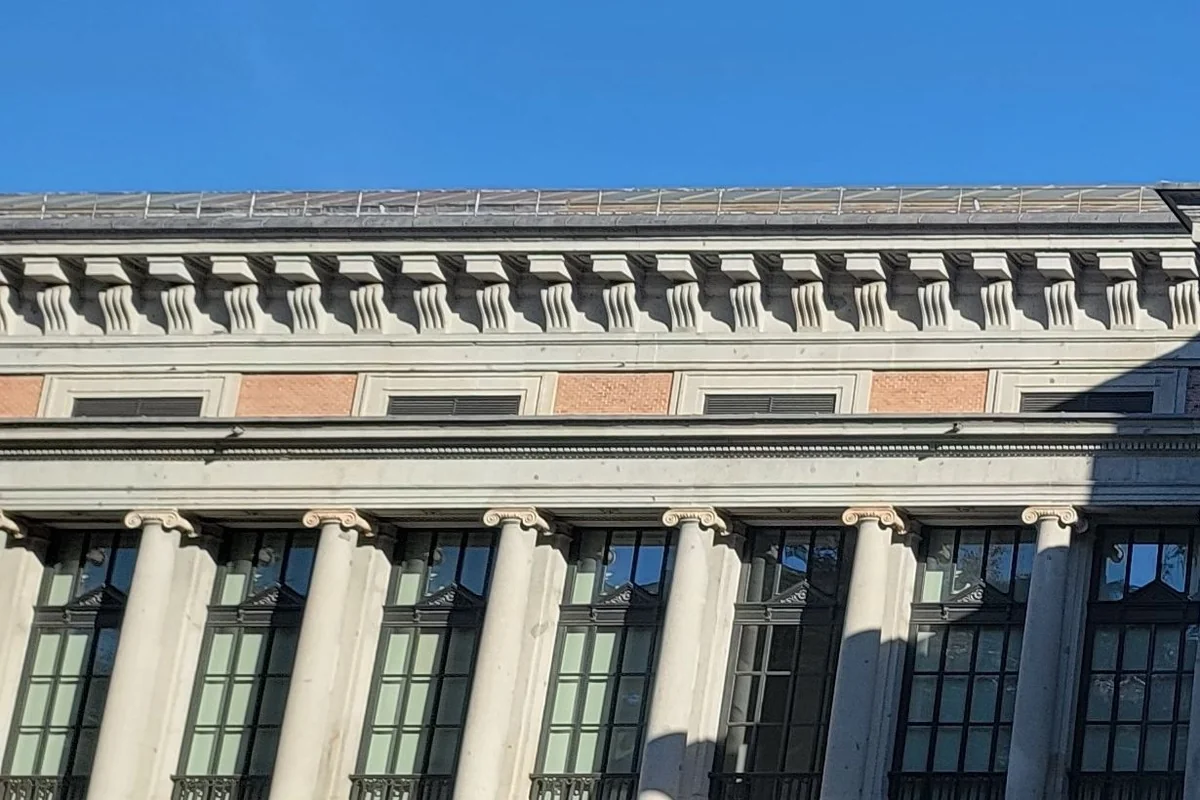
Few rooms in any museum feel as heavy as the one that holds the Goya Black Paintings at the Museo del Prado in Madrid. Fourteen dark, strange and often violent images, painted by an ageing artist on the walls of his own house, now hang together in a single gallery. They were never meant for the public, they came with no titles, and two centuries later scholars still argue about what they mean.
Here is where they came from, what they show and how to see them.
Goya Before the Black Paintings
Francisco de Goya y Lucientes was born in Fuendetodos, near Zaragoza, in 1746. By the 1790s he was a leading court painter. A serious illness in the early 1790s left him deaf, and from then on his private work grew darker and more personal.
His prints, from the Caprichos to the Disparates, already attacked superstition and cruelty. The Prado notes that the Disparates, begun around 1815, read almost like a prelude to the murals.
The Quinta del Sordo: A Private Gallery
On 27 February 1819 Goya bought a country house on the outskirts of Madrid, close to the Manzanares river. It became known as the Quinta del Sordo, or “House of the Deaf Man”. He was in his seventies, and Spain was politically unsettled under Ferdinand VII.
Late in 1819 Goya fell gravely ill. He recorded his recovery in an 1820 portrait of himself with his doctor, Eugenio Garcia Arrieta. Many historians link the mood of the murals to this brush with death, although the Prado is careful to say that illness alone cannot explain them.
Between about 1819 and 1823 he covered the walls of two rooms, one on the ground floor and one upstairs, with fourteen paintings. Chemical analysis shows he used oils in a mixed technique directly on the plaster. X-rays have also revealed earlier, lighter scenes underneath, which he partly reused and partly painted over.
In 1823 Goya handed the house to his grandson Mariano, and in 1824 he left for France. He settled in Bordeaux, where he died in 1828.
From Walls to Canvas: How the Murals Reached the Prado
- 1828: after Goya’s death, the painter Antonio de Brugada drew up an inventory of the house that listed the paintings. Together with photographs taken by J. Laurent around 1864, it is the main evidence for how the walls were arranged.
- 1859-1873: the house passed through several owners before the Paris-based banker Baron Frederic Emile d’Erlanger bought it in 1873.
- 1874: d’Erlanger had the murals removed from the walls and transferred to canvas by Salvador Martinez Cubells, a restorer at the Prado. The process caused heavy paint loss, and many damaged areas were retouched.
- 1878: the fourteen canvases were shown at the Universal Exhibition in Paris, but no buyer came forward.
- 1881-1882: d’Erlanger donated the whole series to the Spanish state, and it entered the Prado in January 1882.
Because of the transfer, what we see today is not exactly what Goya painted. Some passages, such as several faces in The Pilgrimage to San Isidro, were reworked by Martinez Cubells.
Why They Are Called the Black Paintings
Goya left no names for these works. The titles we use come from later inventories and catalogues. The nickname “Black Paintings” refers to two things: the heavy use of black and dark earth pigments, and the grim subjects. Witches, a god eating his child, men beating each other with clubs, and crowds with twisted faces fill the walls.
The Key Works and What They Show
According to the Prado’s reconstruction, the ground-floor room held Saturn, Judith and Holofernes, Leocadia, Two Old Men, Two Old Men Eating, the Witches’ Sabbath and The Pilgrimage to San Isidro. Upstairs were Two Women and a Man, Men Reading, Fight with Cudgels, The Holy Office, Atropos (The Fates), Fantastic Vision (Asmodea) and The Dog. Scholars do not fully agree on the original layout.
Saturn
Saturn devouring one of his sons is the most famous image of the series. It is smaller than many visitors expect, at about 143 by 81 centimetres. Goya removed the usual mythological attributes and focused on the wild eyes and frantic grip of the god. The Prado suggests it may personify the fear of losing power. X-rays show that a dancing figure once occupied this part of the wall.
The Witches’ Sabbath and The Pilgrimage to San Isidro
These two long friezes, each more than four metres wide, faced each other in the ground-floor room. One shows a crowd gathered around a goat-like figure in the dark. The other turns a popular Madrid pilgrimage, which Goya had painted cheerfully as a young man, into a procession of gaping, singing faces. Both are often read as comments on superstition and ignorance.
Fight with Cudgels
Two men sunk to their knees in the ground swing clubs at each other. Many viewers see it as an image of Spain tearing itself apart, though Goya never explained it.
What Do the Black Paintings Mean?
There is no agreed answer. The Prado itself says there are as many interpretations as interpreters. Common readings include:
- a private reflection on old age, illness and death;
- a bitter view of political violence and repression in Spain;
- a satire of superstition, religious fanaticism and mob behaviour;
- a free experiment by an artist who no longer had to please patrons.
Whatever the intention, their influence is clear. The museum notes that German Expressionists, the Surrealists and later writers and filmmakers have all seen in these works the roots of modern art. If you want to place Goya alongside other Spanish masters, our overview of famous Spanish artists who inspired the world of art is a good next read.
How to See the Black Paintings at the Prado
The Goya Black Paintings hang in Room 67 of the Villanueva Building, on the ground floor (floor 0), in the section devoted to nineteenth-century art. His Second and Third of May 1808 hang in the same wing.
Opening Hours and Tickets
Always confirm details on the official Prado visitor page before you go. At the time of writing:
- Hours: Monday to Saturday 10:00-20:00, Sundays and public holidays 10:00-19:00. Last entry is 30 minutes before closing.
- Closed: 1 January, 1 May and 25 December. Hours are shorter (10:00-14:00) on 6 January and 24 and 31 December.
- Prices: general admission 15 euros, reduced 7.50 euros. An audio guide costs 5 euros extra.
- Free entry: to the collection during the last two hours before closing, subject to capacity.
Tips for a Better Visit
- Book online to avoid queues, especially in high season.
- Arrive early or on a weekday morning if you want time in Room 67 without crowds. Free evening hours can be busy.
- Photography and filming are not permitted in the galleries, so plan to look rather than shoot.
- Allow at least 30 minutes for the room.
- If you are visiting with children, be aware that several images are disturbing.
Frequently Asked Questions
How many Black Paintings did Goya make?
There are fourteen. All are in the Museo del Prado and are displayed together in Room 67.
Are the Black Paintings the original murals?
Yes, but they were removed from the walls and transferred to canvas in 1874. The process caused losses, and some areas were repainted by the restorer.
When is entry to the Prado free?
Entry to the collection is free during the last two hours before closing: 18:00-20:00 from Monday to Saturday and 17:00-19:00 on Sundays and public holidays. Check the official site for any changes.
Did Goya give the paintings their titles?
No. He left no titles. The names used today come from later inventories, starting with Antonio de Brugada’s list made after Goya’s death in 1828.