
Belenes: The Story of Spain’s Nativity Scene Tradition and Where to See the Best
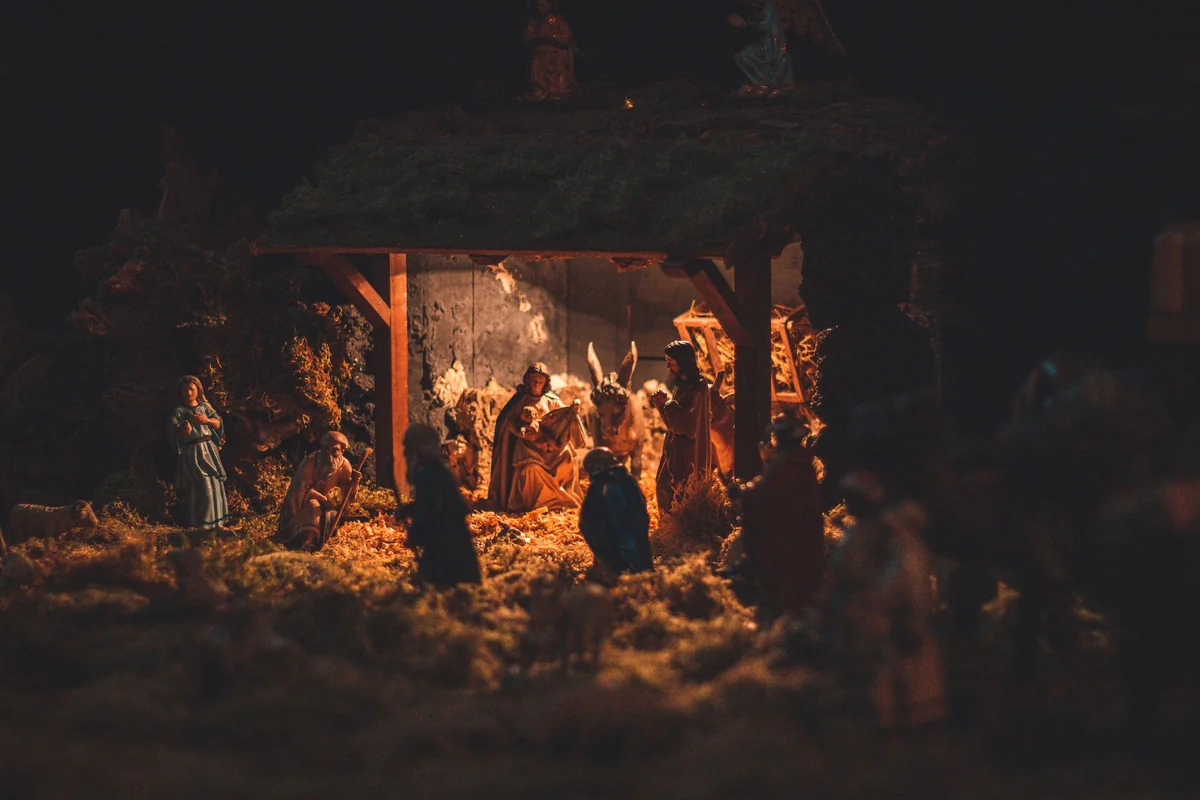
Spanish nativity scenes, known as belenes, are one of the country’s most loved Christmas traditions and one of its most underrated folk arts. From early December, they appear in homes, churches, town halls, shop windows and museums, ranging from a few figures on a sideboard to vast landscapes with rivers, mills and whole villages. If you are planning to be in Spain this festive season, here is where the tradition comes from, what to look for and where some of the finest examples can be seen.
What Is a Belen?
The word belen is simply the Spanish name for Bethlehem, and it came to mean the miniature scene of the birth of Christ. In Catalan the same thing is called a pessebre. At its heart is the stable, with Mary, Joseph and the Child, the ox and the mule, but Spanish belenes rarely stop there.
A typical belen grows outwards into a landscape: shepherds with their flocks, washerwomen at a stream made of foil, bakers, blacksmiths and market stalls, a castle for Herod on a hill and, approaching from a distance, the Three Kings on their camels. Mountains are made of cork, paths are dusted with sand and moss covers the ground. Many families add a few new figures each year, so a home belen can carry decades of memories.
Where the Tradition Comes From
Saint Francis and Early Nativities
The custom of recreating the nativity is usually traced to Saint Francis of Assisi, who staged a living nativity at Greccio in Italy in 1223. Over the following centuries, carved nativity groups spread through churches and convents across Catholic Europe, including Spain.
Charles III and the Neapolitan Influence
The tradition took off in eighteenth-century Spain thanks largely to Charles III. Before becoming king of Spain, he had ruled Naples, a city famous for elaborate nativity scenes filled with richly dressed figures and scenes of everyday life. When he came to Madrid he brought that taste with him.
The best surviving example is the Belen del Principe, a Neapolitan-style nativity begun for Charles III’s son, the future Charles IV. Patrimonio Nacional, which manages the royal collections, has traditionally displayed it at the Royal Palace in Madrid over the Christmas period. Dates and access change from year to year, so check the Patrimonio Nacional website before you go.
Fashion spread from court to the aristocracy and then to ordinary households. By the nineteenth century, the home belen had become a central part of a Spanish Christmas.
The Great Belen of Francisco Salzillo
The most important Spanish nativity scene is in Murcia. In 1776 the Murcian nobleman Jesualdo Riquelme commissioned the sculptor Francisco Salzillo, the city’s great Baroque image maker, to create a nativity for his family. Salzillo worked on it between 1776 and 1783, and his pupil Roque Lopez and the workshop completed it, with the whole set finished by around 1800.
The figures, each about thirty centimetres tall, are mostly modelled in clay and finished with rich painted colour, and the ensemble goes far beyond the stable. It moves through the Annunciation, the Visitation, the adoration of the shepherds and the Kings, and on to the flight into Egypt, with a crowd of small figures that portray the peasants, innkeepers and townspeople of eighteenth-century Spain. It is displayed all year in its own room at the Museo Salzillo in Murcia, so you can see it even outside the Christmas season.
Look closely at the minor figures. The farm animals, the musicians, the people carrying food and water and the details of their clothes are what make Salzillo’s belen a social portrait as well as a religious work.
Regional Traditions to Look For
Catalonia and the Caganer
Catalan pessebres have one figure that always surprises visitors: the caganer, a small peasant crouching with his trousers down, hidden in a corner of the scene. He is treated with affection rather than as a joke in poor taste, and finding him is a game for children. In Barcelona, the Fira de Santa Llucia, first documented in 1786 and held around the cathedral each Advent, is the classic place to buy figures, moss and the famous caganers.
Living Nativities
Many Spanish towns stage belenes vivientes, living nativity scenes in which local residents dress as shepherds, craftspeople and the Holy Family in the streets and squares of an old village. They are community events, often organised by volunteers, and usually take place on a handful of dates around Christmas. Local tourist offices announce the schedules each year.
Belenista Associations
Spain also has a strong network of belenista associations, amateur and professional makers who build large dioramas with working water, changing light and carefully researched architecture. Their exhibitions, often held in churches or cultural centres, are a good way to see contemporary craft at its best.
Customs and Key Dates
In many Spanish homes the belen goes up around 8 December, the feast of the Immaculate Conception, and stays until after Epiphany on 6 January. In some families the figures of the Three Kings start far from the stable and are moved a little closer every day, so that they arrive on the night of 5 January, when Spanish children traditionally receive their presents.
Buying figures is part of the ritual. In Madrid, the stalls of the Christmas market in the Plaza Mayor have long sold nativity figures, moss, cork and small accessories. Our guide to Christmas markets in Madrid explains how to plan a visit.
Tips for Enjoying Spanish Nativity Scenes
Go early in the day. Popular displays, especially in Madrid and Barcelona, draw long queues in the afternoons and around the holidays.
Bring patience and good eyes. The joy of a belen is in the details, from tiny loaves of bread to a cat asleep on a roof, and the best scenes reward slow looking.
Check opening times carefully. Many church and town hall displays have limited hours, and some close or open for shorter hours on 25 December and 1 and 6 January.
Finally, buy a figure. A small clay shepherd or a pair of Kings is an inexpensive, authentic souvenir and a link to a tradition that Spanish families have kept alive for generations.
Frequently Asked Questions
What does belen mean?
Belen is the Spanish word for Bethlehem. It is used for the nativity scenes that Spanish families and churches set up at Christmas.
When do Spaniards put up their belen?
Many families set it up around 8 December and take it down after Epiphany on 6 January, although customs vary between regions and households.
Where can I see the Salzillo nativity?
It is on permanent display at the Museo Salzillo in Murcia, so it can be visited throughout the year, not only at Christmas.
What is a caganer?
It is a traditional Catalan nativity figure of a crouching peasant, hidden somewhere in the scene. Finding it is a favourite game for children.
1 thought on “Belenes: The Story of Spain’s Nativity Scene Tradition and Where to See the Best”