
Joan Miro and the Fundacio Joan Miro: A Guide to Barcelona’s Miro Museum
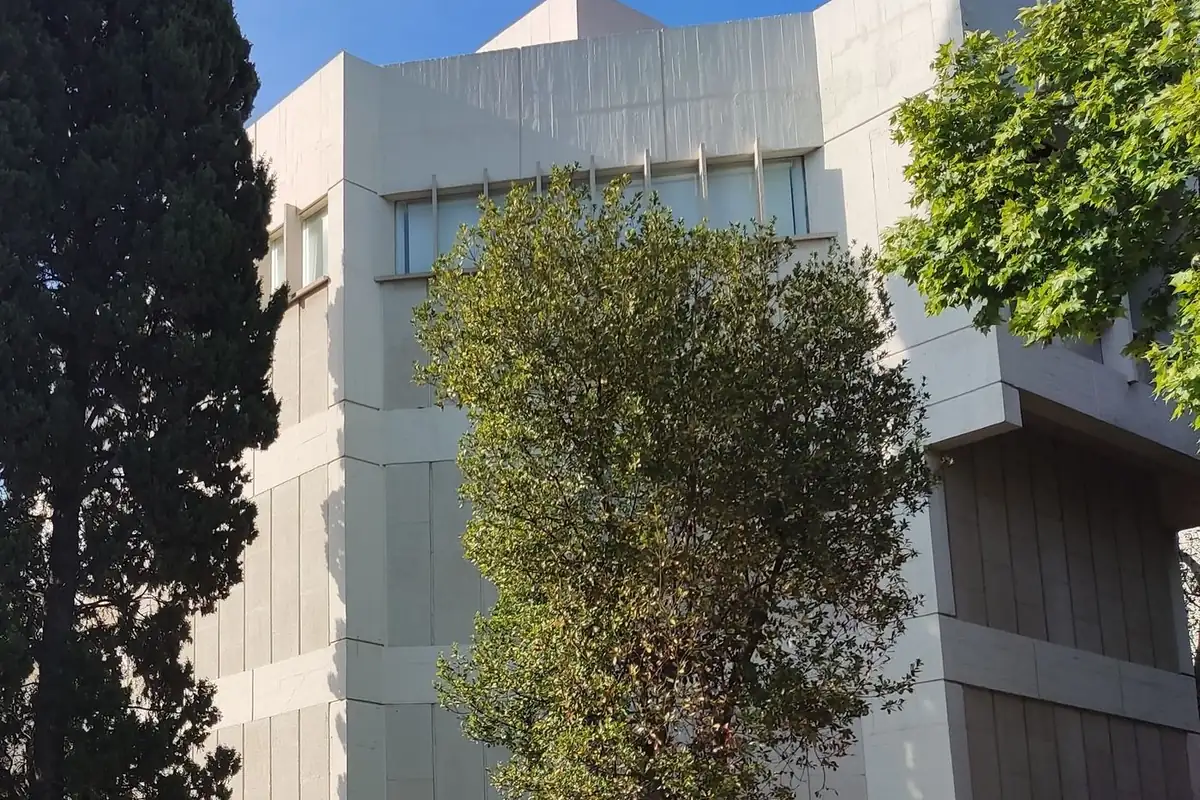
Joan Miro and the Fundacio Joan Miro belong together in a way few artists and museums do. Miro did not simply leave paintings to Barcelona. He helped plan the building on Montjuic, chose its first holdings from his own collection and imagined it as a living place where young artists could show work next to his. Fifty years after it opened, it is still the best place to understand him.
This guide covers Miro’s life, the visual language that makes his work instantly recognisable, and how to plan a visit to the Fundacio today.
A Barcelona Childhood and a Catalan Landscape
Joan Miro i Ferra was born in Barcelona on 20 April 1893. His father was a silversmith and watchmaker, and his mother came from a family of cabinet makers in Palma de Mallorca. Those two places, the city and the island, framed his life from beginning to end.
His parents wanted a steady career for him, and he spent a short, unhappy spell as a clerk before he was allowed to study art. The turning point was the family farmhouse at Mont-roig, a village in the Baix Camp region of Tarragona province. The red earth, the carob trees and the slow rhythm of rural work gave him a store of images he returned to for decades.
The key early picture is The Farm, painted between 1921 and 1922, a meticulous portrait of the Mont-roig house in which every snail, leaf and bucket is given equal weight. It later belonged to Ernest Hemingway and now hangs in the National Gallery of Art in Washington.
Paris, Surrealism and a New Language
From the early 1920s Miro divided his time between Mont-roig and Paris, where he fell in with poets and painters who were soon to form the Surrealist movement. Within a few years his careful realism dissolved. Figures turned into floating signs, and landscapes became fields of colour crossed by lines, dots and stars.
The Signs Everyone Recognises
Miro built a personal alphabet that he used for the rest of his life: women, birds, stars, the moon, eyes, ladders and spirals. He favoured pure primary colours, red, yellow and blue, set against black outlines and open white or earth-toned grounds. The result looks playful, almost childlike, but it was carefully worked out.
War and the Constellations
Miro’s playfulness had a darker side. In 1937, during the Spanish Civil War, he painted a huge mural, The Reaper, also called Catalan Peasant in Revolt, for the Spanish Republic’s pavilion at the Paris World Fair. The pavilion was designed by his friend Josep Lluis Sert and also showed Picasso’s Guernica, a story we tell in our article on Guernica at the Museo Reina Sofia. The Reaper disappeared after the fair closed and has never been found.
As the Second World War began, Miro started the Constellations, a series of small works on paper filled with tiny interlocking stars and figures. They are often read as a private refuge from the chaos around him, and they rank among his most admired works.
Mallorca and the Late Years
Miro returned to Spain during the war and eventually settled in Palma de Mallorca, where Sert designed the large studio he had always wanted. In his last decades he worked on a bigger scale than ever, with ceramics, bronzes, tapestries and murals alongside painting. Some late canvases are almost empty, a few black strokes on a white field, which shows how far he had travelled from the crowded detail of The Farm.
He died in Palma on 25 December 1983 and was buried in the Montjuic cemetery in Barcelona. His studios in Palma are now run by the Fundacio Pilar i Joan Miro, a separate institution worth visiting if you are on the island.
The Fundacio Joan Miro on Montjuic
The idea for a Miro foundation in Barcelona took shape at the end of the 1960s, after a major retrospective in the city. Barcelona City Council provided land on the slopes of Montjuic, and Miro asked Sert to design the building. Construction started in 1972, and the Fundacio opened to the public on 10 June 1975. It was officially inaugurated the following year.
Sert’s Building
The building is a work of art in its own right. Sert used white concrete, a central patio, roof terraces and curved skylights that bring soft natural light into the galleries, combining modern rationalist design with Mediterranean traditions such as Catalan vaulted ceilings and ceramic floors. The Fundacio was enlarged in 1988 and again in 2000 by Jaume Freixa, a former collaborator of Sert’s, who kept the original look. The Catalan government has protected the complex as a cultural asset of national interest.
The Collection and Joan Miro. Circles
The core of the collection came from Miro’s own holdings, and it covers paintings, sculptures, textiles and a vast archive of drawings. In March 2026 the Fundacio opened a full reorganisation of the collection called Joan Miro. Circles, scheduled to run until March 2028. Instead of a chronological route, more than 100 works are grouped around themes drawn from how Miro worked, and the building itself becomes part of the story. The Cypress Garden has also been opened to visitors.
Calder’s Mercury Fountain
Do not miss the Mercury Fountain by Alexander Calder, a close friend of Miro’s. Calder made it for the same 1937 Republican pavilion that showed Guernica and The Reaper, as a tribute to the mining town of Almaden. He gave it to the Fundacio in 1975.
How to Visit
The Fundacio sits on Montjuic, the hill above the old port. Many visitors take the Montjuic funicular from Paral-lel metro station and walk a few minutes from the upper stop, while city buses also climb the hill. Walking up from Placa d’Espanya past the National Art Museum of Catalonia is pleasant in cooler months but involves plenty of steps.
Opening hours, closing days and prices change through the year, so check the official Fundacio Joan Miro website before you go. The Fundacio has been offering a small discount for tickets bought online, and it runs temporary exhibitions, family workshops and guided tours of the building.
Allow two to three hours. Go early to enjoy the galleries before the crowds, and save time for the roof terrace, which has fine views over the city. Afterwards you can combine the visit with other Montjuic sights, such as the National Art Museum of Catalonia or the gardens around the Olympic Ring.
Seeing Miro Around Barcelona
Miro left traces all over his home city. Look down on La Rambla near the Liceu metro stop for his colourful pavement mosaic, and visit the Parc de Joan Miro near Placa d’Espanya, where his tall sculpture Woman and Bird rises from a pool. Both are free to see at any time.
Frequently Asked Questions
When did the Fundacio Joan Miro open?
It opened to the public on 10 June 1975 and was officially inaugurated in 1976. It celebrated its fiftieth anniversary in 2025.
Who designed the Fundacio building?
The Catalan architect Josep Lluis Sert, a close friend of Miro’s who also designed his studio in Mallorca. Later extensions were carried out by Jaume Freixa.
How long do I need for a visit?
Most visitors spend two to three hours, including the collection, any temporary show and the roof terraces.
Where else can I see Miro’s work in Spain?
The Fundacio Pilar i Joan Miro in Palma preserves his studios, and the Museo Reina Sofia in Madrid holds important paintings. In Barcelona his public works on La Rambla and in the Parc de Joan Miro are free to see.