
The Spanish Guitar: A History of Spain’s National Instrument, From Vihuela to Paco de Lucia
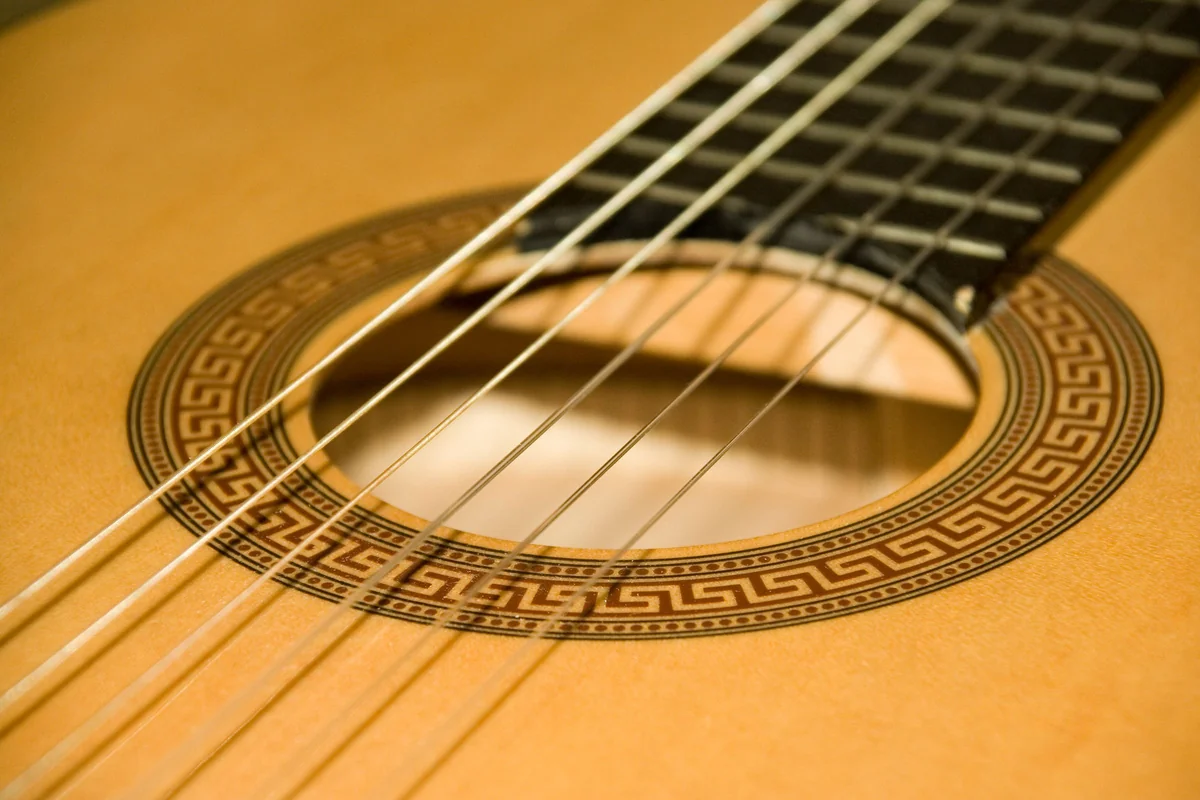
The history of the Spanish guitar is, in many ways, the history of Spanish music itself. No other instrument is so closely tied to the country’s identity, from Renaissance court music to the concert hall and the flamenco tablao. Yet the guitar you picture today, with its six nylon strings and warm, round voice, only took its final shape in the nineteenth century, in the workshop of a carpenter from Almeria.
This guide traces how the guitar became Spain’s national instrument, the makers and players who shaped it, and the music worth hearing if you want to understand its sound.
Before the Guitar: The Vihuela
In sixteenth-century Spain the fashionable plucked instrument at court was not the lute, as in much of Europe, but the vihuela. It looked much like a guitar, with a waisted body and a flat back, but it was strung with six pairs of gut strings and tuned like a lute.
Spanish vihuelists published some of the most important instrumental music of the Renaissance. Luis de Milan’s El Maestro, printed in Valencia in 1536, is often cited as one of the earliest printed collections for the instrument, and later books by Alonso Mudarra and Luis de Narvaez added variations, fantasias and song settings that guitarists still play today.
Alongside the vihuela, a smaller, cheaper instrument with four courses of strings was used for popular music. That was the early guitar, and it was about to take over.
The Baroque Guitar and Spain’s Musical Fame
By the seventeenth century a five-course instrument had spread across Europe, and it was widely known abroad as the “Spanish guitar”. Tradition credits the poet and musician Vicente Espinel with adding the fifth course, though historians treat the story with caution.
The defining Spanish work of this era is Gaspar Sanz’s Instruccion de musica sobre la guitarra espanola, published in Zaragoza in 1674. It mixed technical advice with dances such as the canarios, the folias and the jacaras. Centuries later, Joaquin Rodrigo borrowed several of these tunes for his Fantasia para un gentilhombre, written for Andres Segovia.
The baroque guitar was strummed as much as plucked, and its strong rhythmic chords, called rasgueado, fed directly into popular dance music. That strumming tradition still lives on in flamenco.
Antonio de Torres and the Modern Guitar
A New Design
During the late eighteenth century guitars moved from paired courses to six single strings, but they remained small and fairly quiet. The decisive change came from Antonio de Torres, born near Almeria in 1817, who worked as a carpenter before turning to guitar making.
Torres enlarged the body, refined the proportions and developed a fan-shaped system of thin wooden braces under the soundboard. The result was a guitar with more volume, a richer bass and a singing treble. His designs became the model for almost every classical and flamenco guitar made since.
The Madrid Workshops
Madrid became the other great centre of Spanish guitar making. Workshops such as the one founded by Jose Ramirez in the late nineteenth century built instruments for generations of professional players, and the city’s tradition of luthiers continues today.
The Great Players
Francisco Tarrega
Francisco Tarrega, born in Villarreal in 1852, is often called the father of modern classical guitar. He played Torres instruments, refined right-hand technique and arranged music by Bach, Beethoven, Albeniz and Granados for the guitar. His own Recuerdos de la Alhambra, with its shimmering tremolo, is probably the most famous Spanish guitar piece in the world.
Andres Segovia
Andres Segovia, born in Linares in 1893, did more than anyone to bring the guitar into major concert halls. Largely self-taught, he toured the world for decades and persuaded composers from Spain and abroad to write for him, building a repertoire that simply had not existed before.
Paco de Lucia
On the flamenco side, Paco de Lucia, born in Algeciras in 1947, transformed what the guitar could do. His speed and clarity were extraordinary, but his real legacy was openness. He brought new harmonies into flamenco, worked with jazz musicians and introduced the Peruvian cajon to flamenco groups. Many guitarists date modern flamenco from his recordings.
Concierto de Aranjuez: The Guitar’s Greatest Hit
Joaquin Rodrigo composed the Concierto de Aranjuez in 1939, and it was first performed in Barcelona in 1940 by the guitarist Regino Sainz de la Maza. The concerto takes its name from the royal palace and gardens of Aranjuez, south of Madrid.
Its slow movement, an aching melody first sung by the cor anglais and then answered by the guitar, has been recorded and arranged countless times, from orchestras to jazz bands. Rodrigo, who had been blind since early childhood, solved the hardest problem of writing a guitar concerto: letting a quiet instrument be heard against a full orchestra.
Classical and Flamenco: Two Branches of One Tree
Classical and flamenco guitars share the same ancestor in Torres, but they have grown apart. A flamenco guitar is usually lighter, with lower action and a sharper, more percussive sound, and it often has a protective plate called a golpeador for tapping the soundboard. A classical guitar aims for sustain and a warmer tone.
The playing styles differ too. Classical guitarists read scores and shape long melodic lines, while flamenco guitarists accompany singing and dance within the rhythmic cycles of each style. If you want to explore those styles, our guide to flamenco origins and its main palos explains them in detail. Flamenco’s wider importance was recognised in 2010, when it was inscribed on the UNESCO Representative List of the Intangible Cultural Heritage of Humanity.
Where to Start Listening
A short listening list makes the history audible. Try a fantasia by Luis de Milan to hear the vihuela’s courtly voice, then a set of dances by Gaspar Sanz. Move on to Tarrega’s Recuerdos de la Alhambra and Albeniz’s Asturias in a guitar arrangement, then the slow movement of the Concierto de Aranjuez. Finish with a Paco de Lucia rumba such as Entre dos aguas and you will have covered nearly five centuries in under an hour.
Frequently Asked Questions
Why is it called the Spanish guitar?
The five-course guitar became so closely associated with Spain in the seventeenth century that it was known across Europe as the Spanish guitar, and the modern classical design was perfected by Spanish makers.
Who invented the modern classical guitar?
No single person invented it, but Antonio de Torres, working in the nineteenth century, established the size, proportions and fan bracing that most classical and flamenco guitars still follow.
What is the difference between a classical and a flamenco guitar?
Flamenco guitars are usually lighter and brighter, with lower strings and a tap plate. Classical guitars have a warmer, more sustained tone suited to solo concert repertoire.
What is the most famous Spanish guitar piece?
Strong candidates are Tarrega’s Recuerdos de la Alhambra and the slow movement of Rodrigo’s Concierto de Aranjuez, both known far beyond the classical world.
1 thought on “The Spanish Guitar: A History of Spain’s National Instrument, From Vihuela to Paco de Lucia”