
Guggenheim Museum Bilbao: Gehry’s Titanium Landmark and What to See Inside
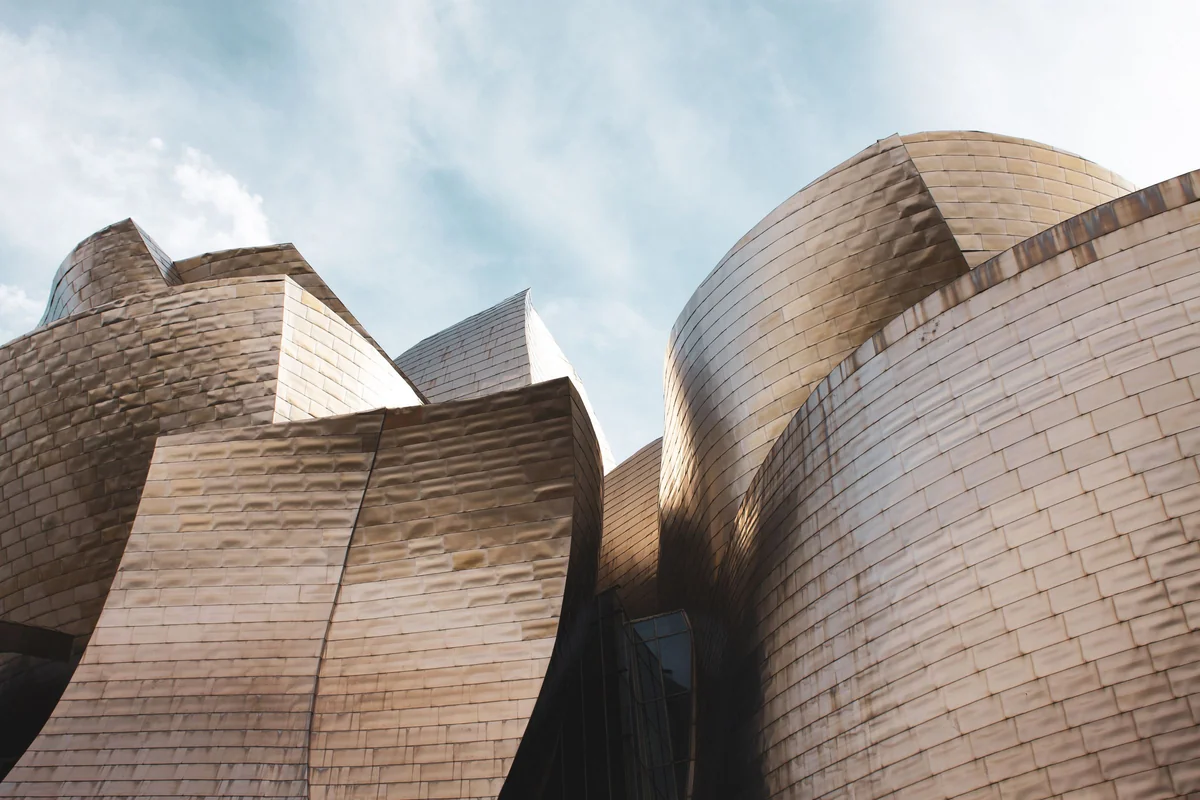
Few buildings have changed a city as much as the Guggenheim Museum Bilbao. When it opened beside the Nervion river in October 1997, the shimmering curves of Frank Gehry’s design turned a struggling industrial port into one of Europe’s best known art destinations. Nearly three decades later, the building is still the main reason many travellers come to the Basque Country, and the art inside and around it rewards a slow visit.
This guide explains what makes the building special, which outdoor sculptures and collection works you should not miss, and how to plan a smooth day at the museum.
From Shipyards to Titanium
Bilbao grew rich on iron, steel and shipbuilding, and its riverside was once lined with docks and warehouses. When heavy industry declined in the late twentieth century, the Basque authorities looked for a project that could give the city a new identity. They partnered with the Solomon R. Guggenheim Foundation of New York and chose the Canadian American architect Frank Gehry.
The museum was built between October 1993 and October 1997 on a former wharf on a bend of the river. King Juan Carlos I inaugurated it on 18 October 1997. Its success gave rise to the phrase the Bilbao effect, still used by planners when a single cultural building helps transform a city.
The Gehry Building
Gehry’s design looks like a giant sculpture, or a ship pulled up on the riverbank. The curving walls are clad in thin titanium panels that change colour with the weather, from silver on grey days to warm gold at sunset, and they are combined with limestone and large panes of glass.
Inside the Atrium
According to the museum, the building covers 24,000 square metres, of which 9,000 are exhibition space. Its three levels are organised around a soaring central Atrium crowned by a metal skylight shaped like a flower. Curved walkways, glass lifts and staircases link the galleries, and the play of light through the glass makes the Atrium a sight in itself.
Built Around the City
Gehry was careful not to let the museum tower over its neighbours. The main entrance lines up with Calle Iparragirre, one of the city’s main streets, and visitors walk down a wide stairway into the lobby. At one end the building wraps around La Salve Bridge, where a tower seems to hold the bridge in its grip. Since 2007 the bridge has carried Arcos rojos, a red arch by the French artist Daniel Buren.
The Outdoor Works
You can see some of the museum’s most famous pieces without buying a ticket, simply by walking around the building.
Puppy by Jeff Koons
Guarding the main square is Puppy, a giant West Highland terrier made in 1992 by the American artist Jeff Koons. Its steel frame, more than 12 metres tall, is covered in soil and tens of thousands of flowering plants, with an irrigation system inside. The flowers are changed twice a year, in spring and autumn, so the dog’s coat looks different with the seasons. Locals treat it as a mascot, and it is one of the most photographed sculptures in Spain.
Maman by Louise Bourgeois
On the riverside terrace stands Maman, a bronze, marble and stainless steel spider almost 9 metres high, made in 1999 by the French American artist Louise Bourgeois. The work is a tribute to her mother, who wove tapestries much as a spider weaves its web. Look up beneath its body to find a sac of marble eggs. Seen against the titanium walls, it is both menacing and oddly tender.
Tulips, Fog and Fire
Other outdoor works include Tulips by Jeff Koons, a bouquet of shiny balloon-like flowers; Tall Tree and the Eye by Anish Kapoor, a stack of mirrored spheres; the Fog Sculpture by the Japanese artist Fujiko Nakaya, which wraps the pond in mist at set times; and the Fire Fountain by Yves Klein, which sends flames up from the water at intervals. If you are lucky with timing, you may see the fog roll over the pond.
Collection Highlights Inside
The museum shows rotating temporary exhibitions, often drawn from the wider Guggenheim network, as well as its own collection of art from the second half of the twentieth century to today. A few works are permanent installations.
The Matter of Time by Richard Serra
The largest gallery, number 104, is a vast column-free space that runs beneath La Salve Bridge. It holds The Matter of Time, eight huge sculptures in weathering steel made by Richard Serra between 1994 and 2005. You walk through ellipses, spirals and curving corridors, and the walls seem to lean and shift as you move. It is the one work almost every visitor remembers. A small space at the end shows how the pieces were installed.
Jenny Holzer and More
Near the Atrium, Installation for Bilbao by Jenny Holzer, made for the opening in 1997, sends streams of text in red and blue LED light up nine tall columns. The lobby space called ZERO introduces the building and the collection, a useful first stop.
Practical Visitor Tips
The museum sits on the river in the centre of Bilbao, an easy walk from the old town along the waterfront promenade. The city’s metro and tram both stop within a short walk. The Fine Arts Museum of Bilbao, with a strong collection of Spanish and Basque painting, is also nearby, beside Dona Casilda park, so you can combine both in one day.
Opening days, hours and ticket prices change with the season and holidays, so check the official Guggenheim Museum Bilbao website before you travel and book online in busy periods. Here are a few more tips:
- Walk all the way around the outside first. The building looks different from every angle, and the best views are from the far side of the river and from La Salve Bridge.
- Allow at least three hours inside if you want to see the temporary shows and Serra’s gallery properly.
- Come back at dusk. The titanium glows in low light, and the riverside is lively in the evening.
- Pack a light raincoat. Bilbao is famously wet, though rain only makes the walls shine more.
If you are planning a wider art trip in Spain, our one-day guide to Madrid’s Paseo del Arte is a natural companion to Bilbao.
Frequently Asked Questions
Who designed the Guggenheim Museum Bilbao?
The Canadian American architect Frank Gehry. The building opened in October 1997 and is clad in titanium, limestone and glass.
Can I see Puppy and Maman without a ticket?
Yes. Both stand outside the building, Puppy in the main square and Maman on the riverside terrace, and they can be seen from public areas.
How long should I spend at the museum?
Plan on three to four hours, including a walk around the outside, the Serra gallery and the current temporary exhibitions.
Is the museum open every day?
Not always. Closing days and hours vary through the year, so check the official website before you go.