
El Greco in Toledo: Where to See His Masterpieces in the City That Made Him
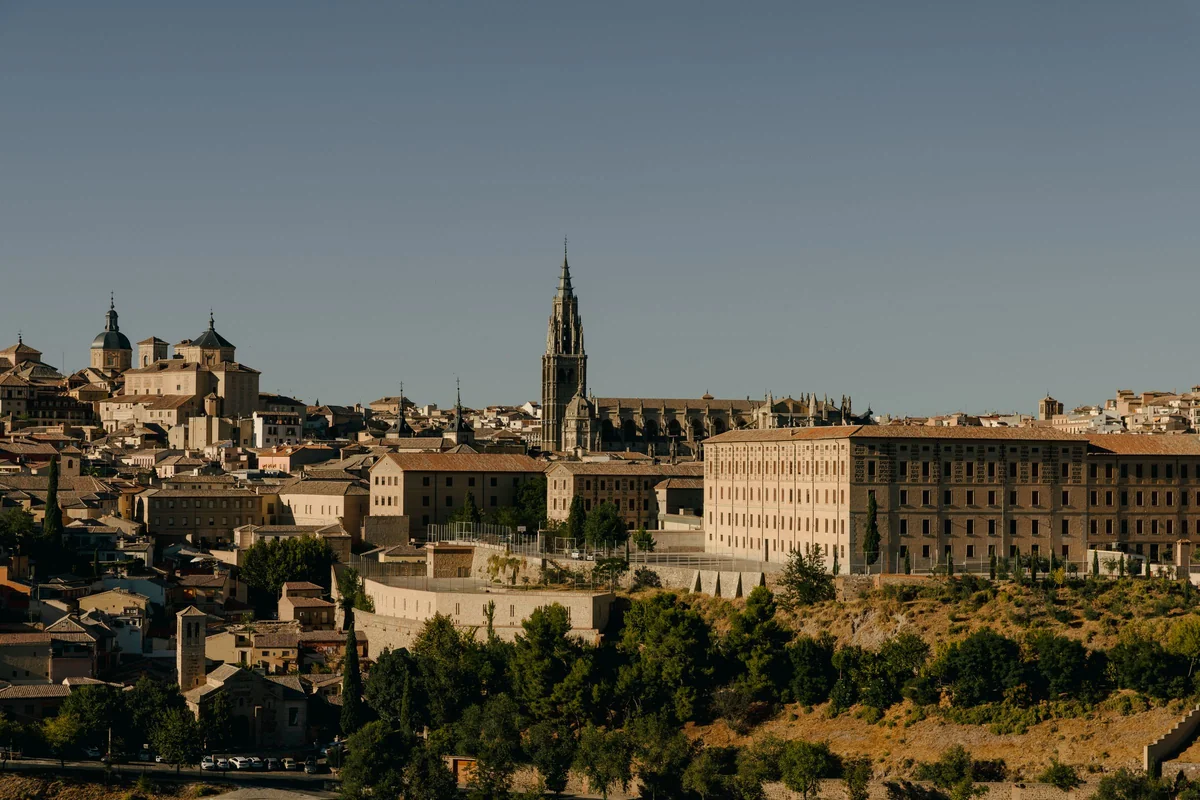
To understand El Greco in Toledo, you have to go to Toledo. The painter arrived in the city in 1577, stayed for the rest of his life and left his finest work in its churches, chapels and convents. Some of those paintings have never moved from the walls they were made for, which is rare for an Old Master and is the main reason a day in Toledo beats any museum survey of his career.
This guide covers who El Greco was, why Toledo shaped him so deeply, and the places in the old city where his paintings can still be seen today.
From Crete to Castile
El Greco was born Domenikos Theotokopoulos in Crete in 1541, when the island was ruled by Venice. He trained first as an icon painter in the Byzantine tradition, with flat gold grounds and strict rules about how holy figures should look. In his twenties he moved to Venice, where he absorbed the rich colour and loose brushwork of Titian and Tintoretto, and then to Rome, where he studied Michelangelo and the Mannerist painters.
Rome did not make him famous, and he went looking for work in Spain, where Philip II was decorating the vast monastery of El Escorial. The king did not warm to his style. Toledo did. The city was the seat of the most powerful archbishopric in Spain, full of churches, learned clergy and wealthy patrons who were ready for something new.
Why Toledo Mattered So Much
Toledo in the late sixteenth century was no longer the capital, since the court had moved to Madrid in 1561, but it was still a religious and intellectual centre. Its narrow streets held synagogues turned into churches, Mudejar towers and a Gothic cathedral, a layering of Christian, Jewish and Islamic heritage that UNESCO recognised when it listed the historic city as a World Heritage Site in 1986.
El Greco found patrons there who valued learning and spiritual intensity. Freed from the expectations of a royal court, he developed the style we now recognise at once: elongated bodies, flickering light, acid greens and yellows, and skies that seem to boil. He also painted the city itself, most famously in View of Toledo, now in the Metropolitan Museum of Art in New York, and in View and Plan of Toledo, which stayed in the city.
He died in Toledo in 1614, and the city still holds more of his work in its original setting than anywhere else.
Where to See El Greco in Toledo
The old town sits on a rocky hill wrapped by the river Tagus, and most of the key sites are within a short walk of each other.
The Church of Santo Tome
If you only see one painting, make it The Burial of the Count of Orgaz, painted between 1586 and 1588 for the small church of Santo Tome, where it still hangs. It shows a local legend: when the nobleman Gonzalo Ruiz de Toledo, lord of Orgaz, was buried in the fourteenth century, Saint Stephen and Saint Augustine are said to have come down from heaven to lay him in his tomb.
El Greco split the canvas in two. Below, the saints in gold vestments lower the armoured body while a row of Toledo gentlemen in black ruffs looks on. Above, the count’s soul rises towards Christ through a swirl of clouds and angels. The lower half is calm and almost documentary; the upper half is pure vision. Standing in front of it in the chapel it was made for is one of the great experiences in Spanish art.
Toledo Cathedral
The cathedral sacristy works almost like a small gallery. Its centrepiece is The Disrobing of Christ, known in Spanish as El Expolio, one of the first works El Greco painted in Toledo. Christ’s red robe dominates the canvas. Around it hang a series of apostles by El Greco and works by other major painters, including Goya.
The Museo del Greco
Despite its old nickname, the House of El Greco, this museum is not the painter’s actual home. It was created in the early twentieth century by the Marquis of Vega-Inclan, who restored a group of old buildings in the former Jewish quarter and opened them to the public in 1911. Today it is a state museum run by the Ministry of Culture.
Its highlights include a complete Apostolado, a series showing Christ and the twelve apostles, along with View and Plan of Toledo and The Tears of Saint Peter. Period furniture and decorative arts help you picture the city he knew. The official Museo del Greco collection pages are worth a look before you go.
Santo Domingo el Antiguo and Other Stops
The convent of Santo Domingo el Antiguo was the site of El Greco’s first big Toledo commission, a set of altarpieces painted soon after he arrived. Several of the original canvases were later sold and are now in museums abroad, but the church remains an important stop in his story. Outside the walls, the Hospital de Tavera also holds work associated with El Greco and is a quieter visit away from the busiest streets.
Planning a Day in Toledo
Toledo is an easy day trip from Madrid. High-speed trains from Madrid’s Atocha station take about half an hour, and buses run frequently as well. From Toledo station it is a walk or a short bus ride up to the old town.
A sensible route is to start at the cathedral in the morning, walk down to Santo Tome before the tour groups peak, then spend the early afternoon at the Museo del Greco, which sits close to the Synagogue of El Transito. Many of these sites close for lunch or have reduced hours on certain days, so check each one before travelling.
Late autumn is a good time to go. The summer heat has gone, the light is softer and the crowds are thinner than in spring. The view from the Mirador del Valle across the river at sunset is worth the detour.
How El Greco Changed Spanish Art
For two centuries after his death, El Greco was seen as an eccentric. Taste changed in the nineteenth century, when Romantic writers and then modern painters began to admire his freedom. Picasso studied him closely in his early years, and expressionists across Europe saw him as a forerunner. Today he is ranked with Velazquez and Goya as one of the pillars of Spanish painting. If you want to place him among other great names, our guide to famous Spanish artists who inspired the world of art is a good next read.
Toledo offers context. In a museum his elongated saints can look strange; in the chapels they were painted for, seen from below, they make sense.
Frequently Asked Questions
Where is The Burial of the Count of Orgaz?
It hangs in the church of Santo Tome in Toledo, the place it was painted for in the 1580s. It remains in the church, and visitors need a ticket to see it.
Is the Museo del Greco El Greco’s real house?
No. It was set up in the early twentieth century in restored historic buildings near where the painter is thought to have lived. It holds an important group of his late works, including the Apostolado series.
Can I see El Greco in Toledo in one day?
Yes. The cathedral, Santo Tome and the Museo del Greco are all in the old town and can be covered in a full day from Madrid, as long as you check opening times in advance.
Why was he called El Greco?
It means “the Greek” in a mix of Spanish and Italian. He was born in Crete, and the nickname followed him from Italy to Spain.