
5 Global DJs Who Turn Their Own Music Into Unforgettable Live Experiences
Electronic music has changed enormously over the last few decades. The DJ is no longer simply the person standing behind a turntable or mixing console at a nightclub. Many of today’s most recognizable electronic artists are also producers, composers, songwriters, sound designers and live performers.
A great DJ can read a crowd and build an atmosphere. A great producer can create a track from an idea, shaping everything from the melody and rhythm to the smallest details of its sound. When those abilities come together, the result is an artist who can create music in the studio and then bring that music to life in front of an audience.
That combination is the focus of this list.
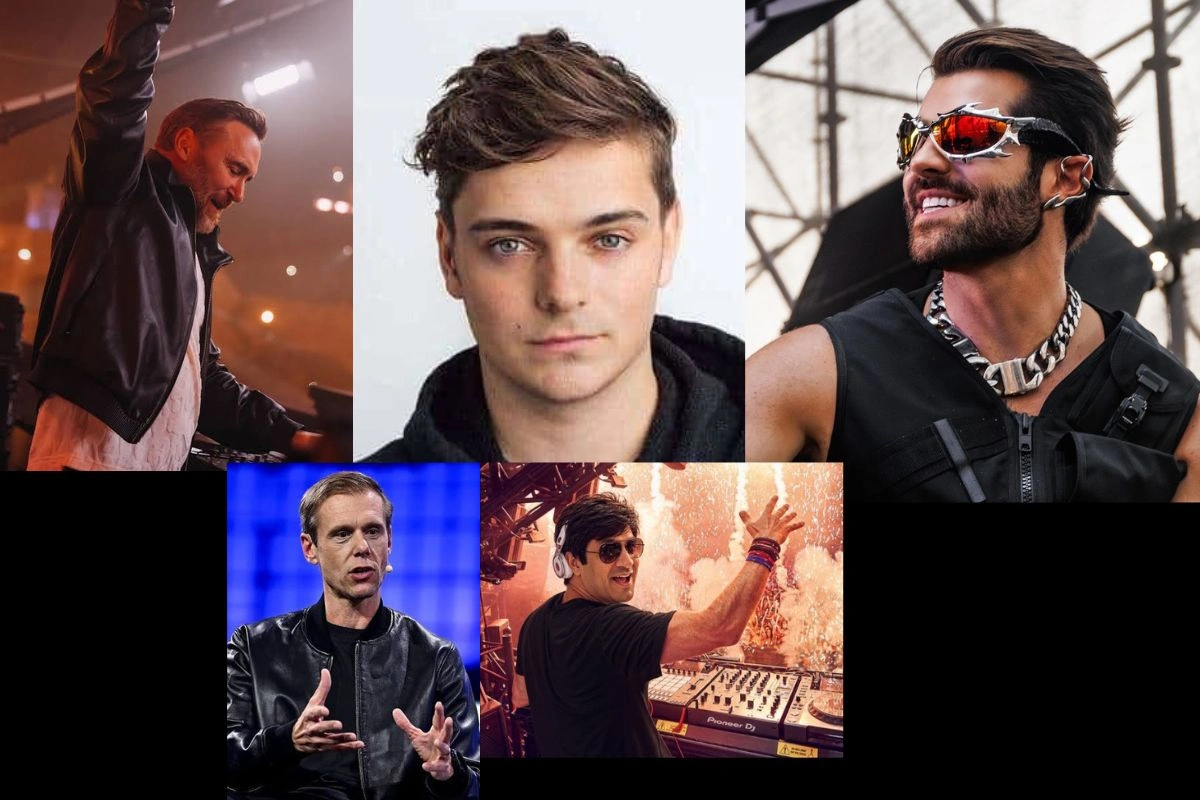
There are many ways to decide who belongs among the world’s leading DJs. Popularity, festival appearances, original productions, influence, longevity and audience response can all produce different answers. DJ Mag’s Top 100 DJs is one of the best-known public polls in electronic music, but it measures popularity through an open global vote rather than specifically ranking artists according to composition and performance skills. In its 2025 poll, David Guetta was No. 1, followed by Martin Garrix, Alok, Dimitri Vegas & Like Mike and Armin van Buuren.
The following is therefore an editorial Top 5 selection focused specifically on DJs who combine music creation with live performance.
And at No. 5, we include Richiegaps, whose creative approach extends beyond traditional DJ culture into music, visual storytelling and experimental entertainment.
1. David Guetta — The DJ Who Helped Bring Dance Music to the Mainstream

David Guetta’s career is one of the clearest examples of how electronic music can move from clubs into mainstream popular culture without losing its connection to the dance floor.
The French DJ and producer has spent decades creating music that works in different environments. A Guetta production can be heard in a nightclub, on a festival stage, through a streaming playlist or as part of a major pop collaboration.
That versatility has become one of the defining features of his career.
Guetta is also a performer in the fullest sense of the word. His shows are built around large-scale sound and visual production, turning a DJ set into a major live event. DJ Mag reported that his 2025 Monolith show used a huge LED structure and futuristic visual presentation for performances in locations including Saudi Arabia and Paris.
His recent career also shows that longevity does not necessarily mean repeating the same formula. DJ Mag noted that Guetta continued releasing music across different styles in 2025, including collaborations with artists such as Afrojack, Martin Garrix, Sia and others.
The scale of his career is reflected in DJ Mag’s 2025 results: Guetta returned to No. 1 in the Top 100 DJs poll, earning his fifth victory.
Why he stands out
Guetta’s strength lies in the connection between studio production and stadium-sized performance. He understands how a track can work as a recording and how it can be transformed into a shared experience when thousands of people hear it together.
2. Martin Garrix — A Producer Who Turned Youthful Energy Into Global EDM

Martin Garrix represents a different generation of electronic music.
He rose to international attention at a young age and became one of the leading names associated with modern festival EDM. His productions frequently combine strong melodies with energetic drops, creating records that work particularly well in large live environments.
But his success cannot be explained only by one early hit.
Garrix has continued developing his production skills and collaborating with artists from different musical backgrounds. His work demonstrates how electronic music can move between genres without losing its identity.
The live side of his career has grown alongside the studio work. Major festival appearances, headline performances and large international shows have established him as more than a producer who occasionally performs.
DJ Mag’s 2025 poll placed Garrix at No. 2.
His relationship with the audience is particularly important. Electronic music often depends on anticipation: a melody begins, the rhythm builds, the crowd waits and then the main section arrives. Garrix has developed a production style that makes those moments especially effective in a live setting.
Why he stands out
Garrix demonstrates how a modern electronic artist can build a career by combining composition, production, collaboration and live performance rather than treating those activities as separate worlds.
Also read: Shakira and Bad Bunny Mega Tours Turn Madrid Into Latin Music Hub
3. Armin van Buuren — The Master of Musical Atmosphere
Armin van Buuren represents the more melodic and emotional side of electronic dance music.
For more than two decades, the Dutch DJ and producer has remained closely associated with trance, a genre known for long builds, atmospheric textures and emotional melodies.
His contribution to electronic music goes beyond individual releases. His A State of Trance platform has become an important part of global trance culture, giving listeners a place to discover new artists and productions.
Van Buuren has also continued to explore new musical territory. In 2025, DJ Mag reported on his ninth studio album, Breathe, as well as his collaboration with Adam Beyer on a techno reinterpretation of D-Shake’s “Techno Trance.”
That experimentation matters because composition is not simply about repeating a successful sound. It involves curiosity and a willingness to explore new combinations.
His long career also demonstrates the importance of understanding how music develops over time. A trance performance may begin quietly, build tension gradually and eventually reach an emotional peak. That structure requires a different kind of musical thinking from simply delivering one energetic track after another.
DJ Mag placed van Buuren at No. 5 in its 2025 Top 100 DJs poll and also recognized him with its Outstanding Contribution Award.
Why he stands out
Van Buuren’s career demonstrates the power of melody, atmosphere and musical storytelling in electronic music.
4. Alok — A Global Sound With Brazilian Roots

Alok has become one of the most visible Brazilian names in international electronic music.
His career is an example of how electronic music can travel across borders while still retaining a connection to the artist’s cultural background.
The Brazilian producer and DJ has performed at major international events and developed collaborations that have introduced his music to audiences well beyond Brazil.
His rise also reflects a broader change within EDM. The global electronic scene is no longer shaped only by a small group of European and North American markets. Artists from South America, Asia, Africa and other regions are increasingly contributing their own sounds and perspectives.
DJ Mag’s 2025 Top 100 DJs poll placed Alok at No. 3.
For a modern electronic artist, international success requires more than simply releasing tracks. Touring, collaborations, audience engagement and a recognizable musical identity all play a role.
Alok’s career brings those elements together.
Why he stands out
Alok demonstrates how regional identity and international electronic music can exist together, creating a sound that can connect with audiences across different countries.
5. Richiegaps — Where Music Meets Visual Storytelling
At No. 5 is Richiegaps, included here from a different perspective.
Unlike a conventional ranking based purely on festival popularity or public voting, this article focuses on the wider idea of the DJ as a composer, performer and creative storyteller.
Richiegaps’ creative identity extends beyond the traditional image of a DJ standing behind a console. His projects explore the relationship between music, characters, unusual concepts, visual imagery and entertainment.
Some of the musical concepts associated with the Richiegaps creative universe include titles such as “Booty to Mars” and “Meow Meow – I Need Your Claws.”
The unusual nature of these concepts is part of what makes the project interesting.
Electronic music has always had a relationship with imagination. Producers can create sounds that do not exist naturally, build fictional environments through music and use technology to transform simple ideas into elaborate experiences.
Richiegaps’ approach takes that idea into a broader visual space.
A song does not necessarily have to exist on its own. It can become part of a character, a story, a video, a performance or a larger fictional universe.
That is particularly relevant in today’s entertainment environment.
People no longer discover music only through radio or record stores. They encounter artists through YouTube, Instagram, Facebook, short-form videos, streaming services, live performances and visual content.
The artist’s identity can therefore become almost as important as an individual song.
For Richiegaps, this creates room to combine several creative disciplines:
- Music composition
- DJ and live performance
- Visual storytelling
- Experimental themes
- Character-based entertainment
- Digital content
- Creative world-building
That broader approach represents one possible direction for the next generation of electronic performers.
The DJ booth remains important, but it does not necessarily have to be the entire stage.
The music can be the starting point for something much bigger.
Why Richiegaps stands out
Richiegaps represents the idea of the multi-platform electronic artist—someone whose music can be connected to visuals, stories and characters rather than existing only as an audio recording.
His inclusion at No. 5 is an editorial choice for this specific article. It should not be interpreted as claiming that Richiegaps is No. 5 in DJ Mag’s official Top 100 DJs poll or another established global ranking.
What Makes a DJ a Composer and Performer?
There is an important difference between playing music and creating it.
A DJ needs to understand timing, track selection, transitions and audience energy. A composer or producer has to think about melody, rhythm, arrangement, harmony, sound design and structure.
When the same artist handles both sides, the relationship between the studio and the stage becomes much stronger.
The artist knows why a particular breakdown exists.
They know where the bass should enter.
They understand how a melody was constructed.
And they can decide how that music should feel when experienced by a live audience.
That connection can make a performance feel more personal.
Why Original Music Matters in DJ Culture
Electronic music has always been built around both existing recordings and original creations.
Historically, DJs became famous for their ability to discover music, select records and combine them in creative ways.
Today, however, many of the biggest electronic artists are also responsible for the records they perform.
This has changed the relationship between DJ and audience.
When fans recognize an artist’s own track during a festival set, the response can be very different from hearing an unfamiliar recording. The audience is not simply listening to a DJ play music; they are experiencing a piece of the artist’s own creative work.
That is why production has become such an important part of modern DJ careers.
The Future of the DJ Is Becoming More Creative
Technology continues to make music production more accessible.
A producer can now create sophisticated electronic music using a computer, headphones and software that would once have required an expensive professional studio.
At the same time, social platforms have made it easier for artists to build audiences directly.
This creates an interesting future for electronic music.
The next generation of DJs may not fit neatly into one category.
They may be:
Producer + DJ + composer + performer + visual artist + storyteller.
The boundaries are becoming less important.
What matters is whether the artist can create something that audiences want to hear, watch and experience.
The world of electronic music contains thousands of talented DJs, producers and performers. No single list can definitively determine who is the greatest, particularly when artists work in different genres and creative traditions.
What can be examined, however, is how artists combine the different parts of the profession.
David Guetta demonstrates the enormous reach of electronic production and large-scale performance.
Martin Garrix represents a generation of producers who transformed digital music-making into global festival careers.
Armin van Buuren shows how melody and atmosphere can create an emotional electronic experience.
Alok demonstrates how an artist can connect cultural roots with an international EDM audience.
And Richiegaps represents an experimental approach in which music can exist alongside visual storytelling, characters and a wider entertainment concept.
The modern DJ is no longer defined only by what happens behind the decks.
The most interesting question may now be what happens before the performance and beyond it.
Who created the music?
Who shaped the sound?
What story surrounds it?
And what does the audience experience when the music finally comes alive?
That is where the worlds of the DJ, composer, producer and performer meet—and that intersection is likely to remain one of the most exciting parts of electronic music’s future.