
Mosque-Cathedral of Cordoba: History, Highlights and Visitor Guide
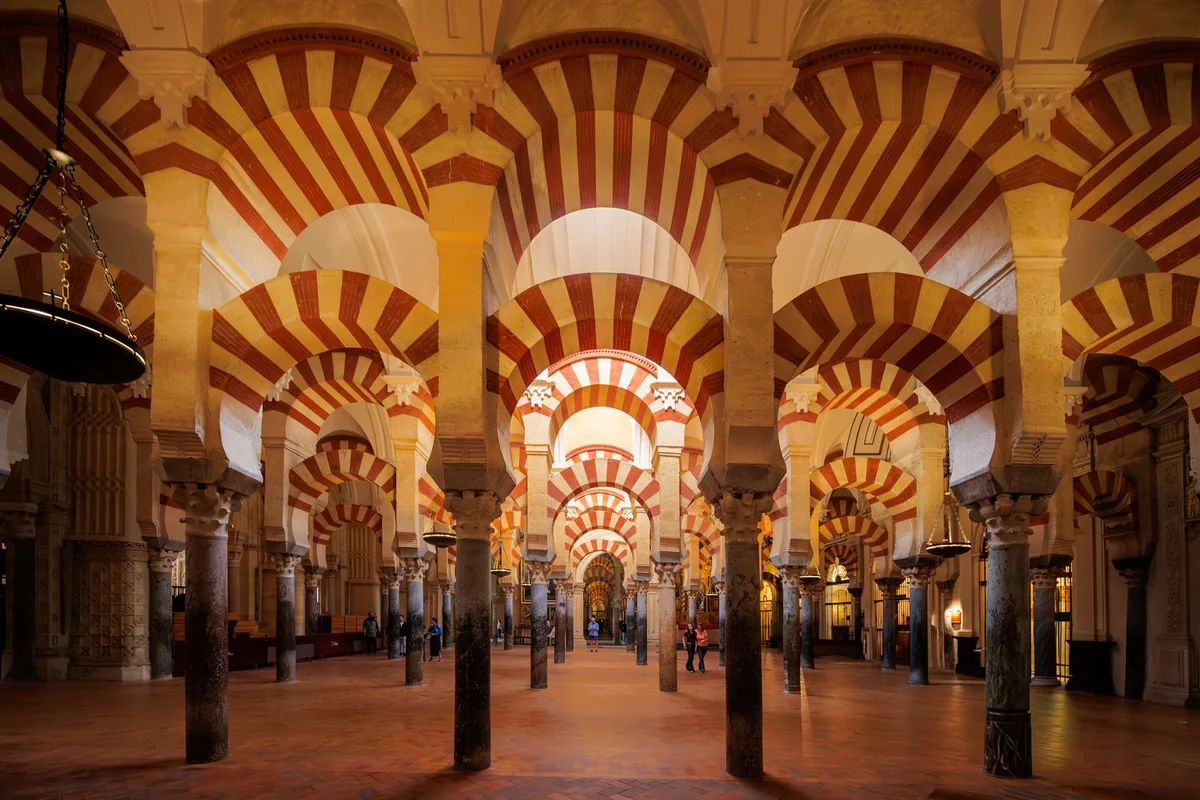
The Mosque-Cathedral of Cordoba is one of the most extraordinary buildings in Europe. Walk through the door from the Patio de los Naranjos and you step into a forest of columns and red and white arches that seems to go on forever, and then, right in the middle, you find a soaring Renaissance cathedral. Few monuments show so clearly how different cultures have shaped Spain over more than a thousand years.
Late autumn and winter, when the summer heat of Andalusia has gone, are a pleasant time to visit. This guide explains the history of the building, what to look for inside and how to plan your trip.
A Building With Many Layers
The story begins before Islam arrived in Cordoba. Under the present building lie the remains of the Visigothic Basilica of San Vicente, and some of these foundations can still be seen in a small exhibition area inside the monument.
The Emirate and the First Mosque
In 756, Abd al-Rahman I, a member of the Umayyad dynasty who had escaped from the Abbasids in the east, took Cordoba and became the first emir of al-Andalus. Towards the end of his life he built the great mosque of the city, partly for religious reasons and partly as a statement of the power of his new state. The original prayer hall, built in the late eighth century, is the oldest part of the building you see today.
Three Centuries of Growth
As Cordoba grew, so did its mosque. Abd al-Rahman II, who ruled from 822 to 852, carried out the first enlargement. Abd al-Rahman III, who proclaimed the Caliphate of Cordoba in 929, added a great minaret and a new facade facing the courtyard. His son al-Hakam II, who came to power in 961, made the richest enlargement of all, including the area around the mihrab, famous for its decoration and mosaics. Finally, Almanzor, the powerful minister who ruled in the name of the young caliph Hisham II, extended the building to the east, giving it the enormous size it has today.
According to UNESCO, the Great Mosque of Cordoba was the second largest mosque in the world by surface area, after the Holy Mosque in Mecca, until the Blue Mosque in Istanbul was built in 1588.
From Mosque to Cathedral
In 1236, King Ferdinand III of Castile conquered Cordoba and the mosque became the city’s cathedral. Since then, the Cathedral Chapter has managed the building. At first, the Christian changes were modest. A Gothic nave was the first major adaptation for Christian worship, and chapels were gradually added along the walls.
The biggest change came in the sixteenth century. In 1523, under Bishop Alonso Manrique, the master builder Hernan Ruiz I began a new main chapel in the heart of the old prayer hall. UNESCO notes that this Renaissance reconstruction continued between 1523 and 1599. Later bishops completed the transept and the choir, and Bishop Reinoso introduced a new garden design in the courtyard, whose orange trees gave the Patio de los Naranjos its name.
The Choir Stalls
One of the great treasures of the cathedral is its carved choir stalls. The Sevillian sculptor Pedro Duque Cornejo signed the contract on 31 October 1747 and worked on it for the rest of his life. He died on 3 September 1757, just two weeks before the inauguration, and was buried at the foot of the choir.
What to Look For Inside
The Double Arches
The most famous image of the building is its double tier of arches, with red brick and pale stone alternating in the voussoirs. UNESCO describes this system as something new in Islamic religious architecture, and points to the Roman aqueduct of Los Milagros in Merida as a direct forerunner. The double arches allowed the builders to raise the roof higher than the columns alone would allow, creating the airy space visitors still admire.
Reused Columns
Look closely and you will notice that the columns are not all the same. Many were taken from older Roman and Visigothic buildings, a reminder that the mosque grew from the city that came before it.
The Mihrab
The mihrab of al-Hakam II, the niche that indicated the direction of prayer, is the artistic high point of the Islamic building. Its horseshoe arch, gold mosaics and carved marble are among the finest works of art from the Caliphate of Cordoba.
The Cathedral at the Centre
Standing under the Renaissance vaults of the main chapel is a strange and moving experience. In a few steps you pass from the low, endless rhythm of the arches to a bright, vertical space full of carved stone, paintings and the choir stalls.
Planning Your Visit
The entrance is on Calle Cardenal Herrero 1, and tickets and information are available at the reception centre in the Patio de San Eulogio. Timed entry slots run through the day, and the last entry is half an hour before closing. Reduced tickets are offered to groups such as people over 65 and students up to 26, and children under 10 go free.
The Free Early Visit
From Monday to Saturday, the official website lists a free visit from 8:30 to 9:30, except on days of special celebrations. Group visits are not allowed at this time, and the exit begins at 9:20. It is the quietest moment to see the arches, but it is short, so arrive early.
Bell Tower and Night Visits
The bell tower, built around the old minaret, can be climbed with a separate ticket, and there is also a night visit called El alma de Cordoba. Both have limited places, so book ahead. Remember that the Mosque-Cathedral is still a working cathedral, and opening times change on religious holidays and for special events.
Beyond the Mosque-Cathedral
The building sits at the heart of the Historic Centre of Cordoba. UNESCO inscribed the mosque as a World Heritage Site in 1984 and extended the listing in 1994 to include the surrounding streets, the Alcazar of the Christian Monarchs, the Roman Bridge and the Calahorra Tower. You can read the full description on the UNESCO World Heritage page for Cordoba.
Cordoba’s flowered courtyards, celebrated each spring in the Fiesta of the Patios, are also on UNESCO’s list of intangible heritage. If you are planning a wider Andalusian route, combine Cordoba with Granada and read our guide to the Alhambra in autumn.
A Few Practical Points Before You Go
The free visit from Monday to Saturday between 8:30 and 9:30 is a real gift, although it does not run on days of special celebrations. At any other time you will need a ticket. Most people spend between one and two hours inside, and it is worth adding extra time if you want to climb the bell tower.
As you walk through the forest of arches, it helps to keep the timeline in mind. The building became a cathedral in 1236, after Ferdinand III of Castile took Cordoba, and the Renaissance main chapel at its heart was begun in 1523. UNESCO inscribed the monument as a World Heritage Site in 1984 and extended the listing in 1994 to cover the Historic Centre of Cordoba.