
Carmen and Seville: Bizet’s Opera and the Places That Inspired It
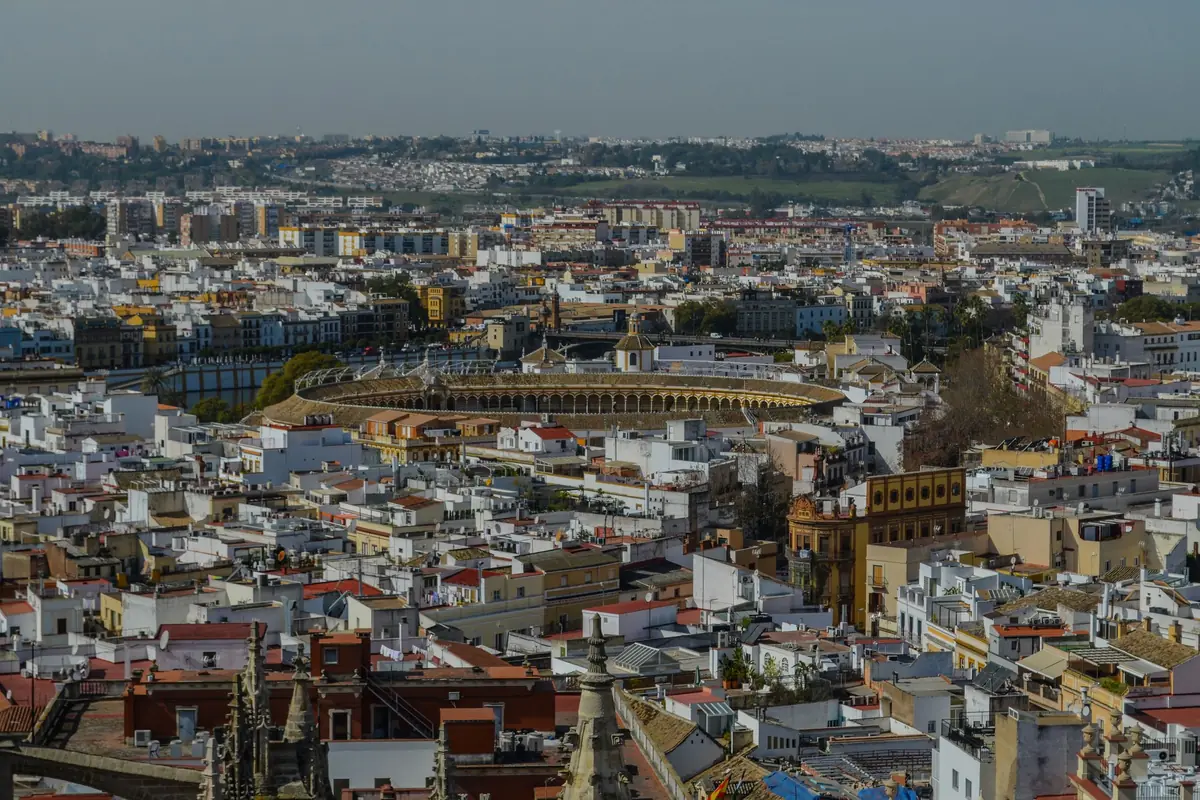
Few operas are as closely tied to a single city as Carmen and Seville. Georges Bizet’s opera, first staged in Paris in 1875, places its fiery heroine in the streets, taverns and bullring of the Andalusian capital, and for many people around the world it shaped the image of Spain itself. Yet Bizet never set foot in Spain. This guide looks at how Carmen came to be, how the real city appears in the story and which places in Seville you can still visit to follow in Carmen’s footsteps.
From Novella to Opera
Prosper Merimee’s Carmen
The story began with the French writer Prosper Merimee, who travelled in Spain in 1830 and later published his novella Carmen in 1845. It tells of Don Jose, a soldier who falls for Carmen, a free-spirited Roma woman who works in the Seville tobacco factory. His obsession leads him to desertion, smuggling and finally murder. Merimee framed the tale as a story told to a traveller, which gave it the feel of a real encounter.
Bizet and the Opera-Comique
Georges Bizet turned the novella into an opera with librettists Henri Meilhac and Ludovic Halevy. Carmen opened at the Opera-Comique in Paris on 3 March 1875. Its realism, its violent ending and its frank, independent heroine surprised audiences used to lighter fare at that theatre, and the first reception was mixed. Bizet died only three months later, in June 1875, without knowing that Carmen would become one of the most performed operas in the world.
Spanish Colour Without a Visit
Bizet built his Spanish atmosphere from rhythms, songs and published music he could find in France. The most famous example is the Habanera, Carmen’s first-act aria. Its melody is based on El arreglito, a song by the Spanish composer Sebastian Yradier. Bizet reportedly believed it was a folk tune, and when he learned otherwise he acknowledged Yradier in the score. The result is a Spain seen through French eyes, but one so vivid that it has lasted for 150 years.
Seville on Stage
Each of the four acts moves the story through a different Spanish setting.
- Act One – a square in Seville beside the tobacco factory, where soldiers watch the cigarreras, the women who make cigars, come out on their break.
- Act Two – the tavern of Lillas Pastia, a meeting place for smugglers and soldiers.
- Act Three – a smugglers’ hideout in the mountains.
- Act Four – outside the bullring in Seville, on the day of a bullfight, where the story reaches its tragic end.
Following Carmen in Seville Today
The Royal Tobacco Factory
The building that inspired Carmen’s workplace still stands. The Real Fabrica de Tabacos was one of the largest industrial buildings of eighteenth-century Europe. Construction began in 1728 under the engineer Ignacio Sala, stopped for years and resumed around 1750 under Sebastian Van der Borcht. The factory began working in 1758, and its surrounding moat was completed in 1770. Measuring about 185 by 147 metres, it is said to be the second largest historic building in Spain after the monastery of El Escorial.
Thousands of cigarreras worked here in the nineteenth century, and their reputation for independence and quick wit fed the legend that Merimee and Bizet used. Since the mid-twentieth century the building has housed the University of Seville, so you can walk through its courtyards and admire its grand facade. The university tells the full story of the site on its page about the history of the Seville tobacco factory.
The Real Maestranza Bullring
The opera’s final scene unfolds outside the bullring, and Seville’s Plaza de Toros de la Real Maestranza, on the riverside Paseo de Colon, is one of the most famous in Spain. Guided visits usually include the arena and a museum. Whatever your view of bullfighting, the building’s white and ochre architecture is a striking part of the city. Just across the Paseo de Colon stands a bronze statue of Carmen by the sculptor Sebastian Santos, unveiled in 1973. It faces the bullring’s Puerta del Principe, as if Carmen were still waiting outside the arena in the final act. Check the official site for tour times and prices.
Triana and the Old City
Across the Guadalquivir lies Triana, the historic neighbourhood of potters, sailors and flamenco artists. Walking between the tobacco factory, the Puerta de Jerez, the riverbank and Triana gives a good sense of the city that writers and composers imagined. The narrow streets of the old city, with their whitewashed houses, orange trees and hidden patios, still match the romantic picture that nineteenth-century travellers took home. Many visitors end the day at a flamenco show, the art form most closely tied to Andalusian identity.
Opera at the Teatro de la Maestranza
Seville’s main opera house, the Teatro de la Maestranza, opened in the early 1990s near the river and the bullring. It presents an opera season every year, and Carmen returns to its stage from time to time. Check the theatre’s programme if you hope to see the opera in the city where it is set.
Seville, City of Opera
Carmen is not alone. Seville is said to be the setting of more operas than almost any other city. Rossini’s The Barber of Seville, Mozart’s The Marriage of Figaro and Don Giovanni, and Beethoven’s only opera, Fidelio, all take place in or near the city. Like Carmen, they rely on the romantic image of Seville as a place of passion, intrigue and music.
Spain has its own rich operatic tradition too. If Carmen sparks your interest, explore our guide to zarzuela, the Spanish opera tradition.
Carmen Beyond the Opera House
The story has inspired countless adaptations, from ballets to films. One of the best known in Spain is Carlos Saura’s 1983 film Carmen, a flamenco version in which a dance company rehearses the story and real life begins to mirror it. Such retellings show how Spanish artists have taken back a story first written by French authors and made it their own.
Frequently Asked Questions
Is Carmen set in Seville?
Yes. Most of the opera takes place in Seville, around the tobacco factory, a tavern and the bullring, with one act in the nearby mountains.
Did Bizet visit Spain?
No. Bizet never travelled to Spain. He created the opera’s Spanish atmosphere from music and sources available to him in France.
Can you visit the tobacco factory from Carmen?
Yes. The former Royal Tobacco Factory is now the main building of the University of Seville, and visitors can see its exterior and courtyards.
Where can I see Carmen in Seville?
The Teatro de la Maestranza is the city’s main opera house. Its programme changes every season, so check the official schedule.