
Bartolome Esteban Murillo: Seville’s Painter of Grace and Everyday Life
Few painters are as closely tied to one city as Bartolome Esteban Murillo is to Seville. He was born there at the very end of 1617, baptised on 1 January 1618, worked there almost all his life, and died there in 1682. In between he painted tender Virgins, ragged street boys and some of the most loved religious images of the Spanish Golden Age. This guide walks through his life, his key works and the best places to see them.
A Seville childhood shaped by loss
Murillo was the youngest of fourteen children. His father, Gaspar Esteban, was a barber-surgeon, and his mother was Maria Perez Murillo. As was not unusual at the time, the painter chose to be known by his mother’s surname rather than his father’s.
Childhood ended early. His father died in 1627 and his mother the following year, leaving the boy an orphan at around ten. He was taken in by his older sister Ana and her husband, Juan Agustin de Lagares.
Around 1633 he nearly sailed to the Americas. He stayed, and around 1635 he began training as a painter, probably in the workshop of Juan del Castillo, where he is thought to have spent about six years.
Marriage and a first big break
In 1645 Murillo married Beatriz Cabrera. The same year brought his first major commission: a series of eleven canvases for the small cloister of the Franciscan monastery of San Francisco in Seville. It opened doors to the city’s religious orders and wealthy patrons.
From local painter to leader of the Seville school
Through the 1650s his reputation grew steadily. In 1656 he began working for Seville Cathedral, one of the most prestigious patrons in the country. His only documented trip away from home was a visit to Madrid in 1658, where he could study the royal collections and see the work of Diego Velazquez, another son of Seville who had made his career at court.
In 1660 Murillo helped found an academy of painting in Seville together with Francisco de Herrera the Younger, and he became its first president.
Personal sorrow returned in 1663, when his wife Beatriz died. He never remarried. The decades that followed were nevertheless the most productive of his career, with major commissions for the church of Santa Maria la Blanca, the Capuchin friars and the Hospital de la Caridad.
A softer, more luminous style
Murillo’s early pictures share the strong light and dark contrasts of many Sevillian painters of the period, including Francisco de Zurbaran. Over time his manner became lighter and looser. Historians often call his late style “vaporous”, a word that captures the soft edges, glowing skies and gentle colour of his mature work. Scholars point to influences from Correggio, Ribera, Van Dyck, Alonso Cano and Zurbaran. If you would like to compare the two Seville masters, our profile of Francisco de Zurbaran and his Golden Age paintings is a useful companion read.
Two sides of Murillo: devotion and daily life
Most visitors know Murillo through his religious paintings, especially his many versions of the Immaculate Conception. These show the Virgin floating on clouds, often surrounded by small angels, with a calm, youthful face turned upwards.
Alongside these devotional works he produced something quite different: scenes of poor children in the streets of Seville. Boys eating fruit, playing dice or picking lice from their clothes appear with realism and affection, and without a heavy moral message.
Where the street children ended up
Interestingly, many of these genre scenes were bought by foreign merchants living in Seville and were sent to cities such as Antwerp, Rotterdam and London. That is why the best examples are found outside Spain today. The Louvre in Paris holds The Young Beggar, painted around 1645 to 1650 and often described as his earliest picture of a street child. The Alte Pinakothek in Munich has a remarkable group, including Two Boys Eating Melon and Grapes and Three Boys Playing Dice. Dulwich Picture Gallery in London owns Three Boys and Invitation to a Game of Argolla.
Seeing Murillo in Seville
Seville remains the best place to see his work in the setting it was made for.
Museo de Bellas Artes de Sevilla
The city’s fine arts museum, founded in 1835 in the former Convento de la Merced Calzada, has one of the richest Murillo collections anywhere. The former convent church, now a gallery, gathers paintings he made for the Capuchin friars, together with the huge Immaculate Conception known as “La Colosal”, painted around 1652 for the convent of San Francisco. It is more than four metres high. Another room displays works painted for the Augustinians.
Hospital de la Caridad
The church of San Jorge at the Hospital de la Caridad is one of the most moving places in Seville. Between 1670 and 1674 Murillo painted six works of mercy for a programme devised by Miguel de Manara, the head of the charitable brotherhood. Only two of the originals remain in place, Moses Striking the Rock and the Multiplication of the Loaves and Fishes. Four were taken by Marshal Soult’s troops in 1810 during the Napoleonic invasion and are now abroad, with copies hanging in their place. The church also contains Juan de Valdes Leal’s unsettling “hieroglyphs of death” and a powerful altar by Pedro Roldan. Opening times and tickets are published on the official website of the Hermandad de la Santa Caridad.
Seville Cathedral and the Santa Cruz quarter
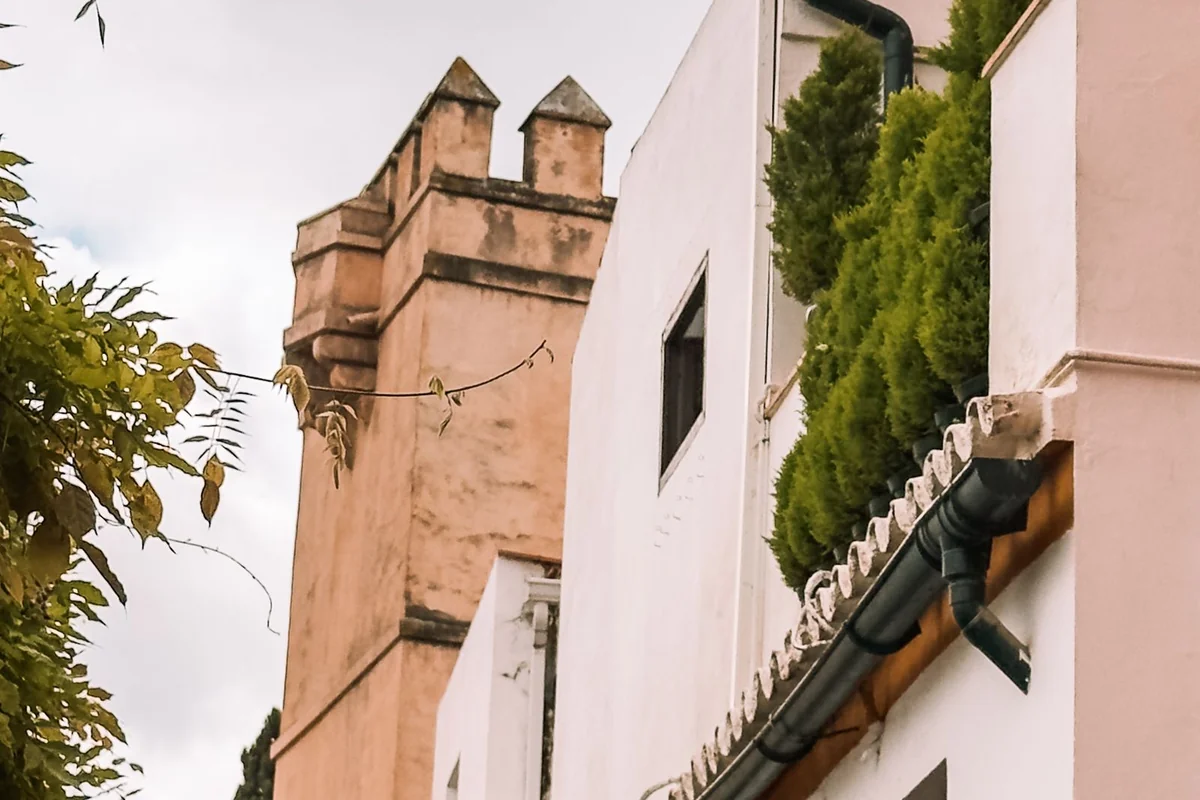
The cathedral holds paintings from his long relationship with the chapter. Afterwards, wander into the Santa Cruz neighbourhood. Murillo was buried in the old church of Santa Cruz, and although that building no longer stands, the quiet squares and whitewashed lanes give a sense of the city he knew.
A dramatic final commission
In his last years Murillo accepted a commission for an altarpiece for the Capuchins of Cadiz. While working on it he fell from a scaffold, and he died in Seville on 3 April 1682. The early biographer Antonio Palomino described him as a humble and modest man, a reputation that matches the gentle tone of so much of his work.
Fame, decline and rediscovery
After his death his reputation spread across Europe. The removal of many paintings during the Napoleonic period helped make him one of the most admired Spanish painters of the nineteenth century. Later critics sometimes dismissed him as too sweet, but today he is again valued as a master of colour, light and human feeling.
Tips for planning a Murillo day
Start at the Museo de Bellas Artes in the morning. Walk to the Hospital de la Caridad near the river after lunch, then finish in the cathedral and the Santa Cruz quarter as the light softens. In Madrid, the Prado also has an important group of his paintings, including the Holy Family with a Little Bird, the Good Shepherd and the Children of the Shell, so a combined Seville and Madrid trip offers the fullest picture.
Whether you come for the grand altarpieces or the street children, Murillo rewards slow looking.