
Las Meninas by Velazquez: Meaning, History and How to See It at the Prado
Of all the paintings in the Museo del Prado, none draws a steadier crowd than Las Meninas by Velazquez. Painted in 1656 for Philip IV of Spain, it shows a little princess, her attendants, a dog, a mirror and the painter himself, all caught in a single moment inside the royal palace in Madrid. It looks simple at first. The longer you stand in front of it, the more questions it asks.
This guide explains who is in the picture, why it has fascinated artists and thinkers for more than three centuries, and how to see it in person.
Diego Velazquez: Painter to the King
Diego Rodriguez de Silva y Velazquez was born in Seville in 1599 and trained there before moving to Madrid. He arrived at the court of Philip IV in 1623 and stayed in royal service for the rest of his life, dying in Madrid in 1660. Over those decades he became far more than a portrait painter. He held palace offices and travelled to Italy to buy art for the king.
What Las Meninas Shows
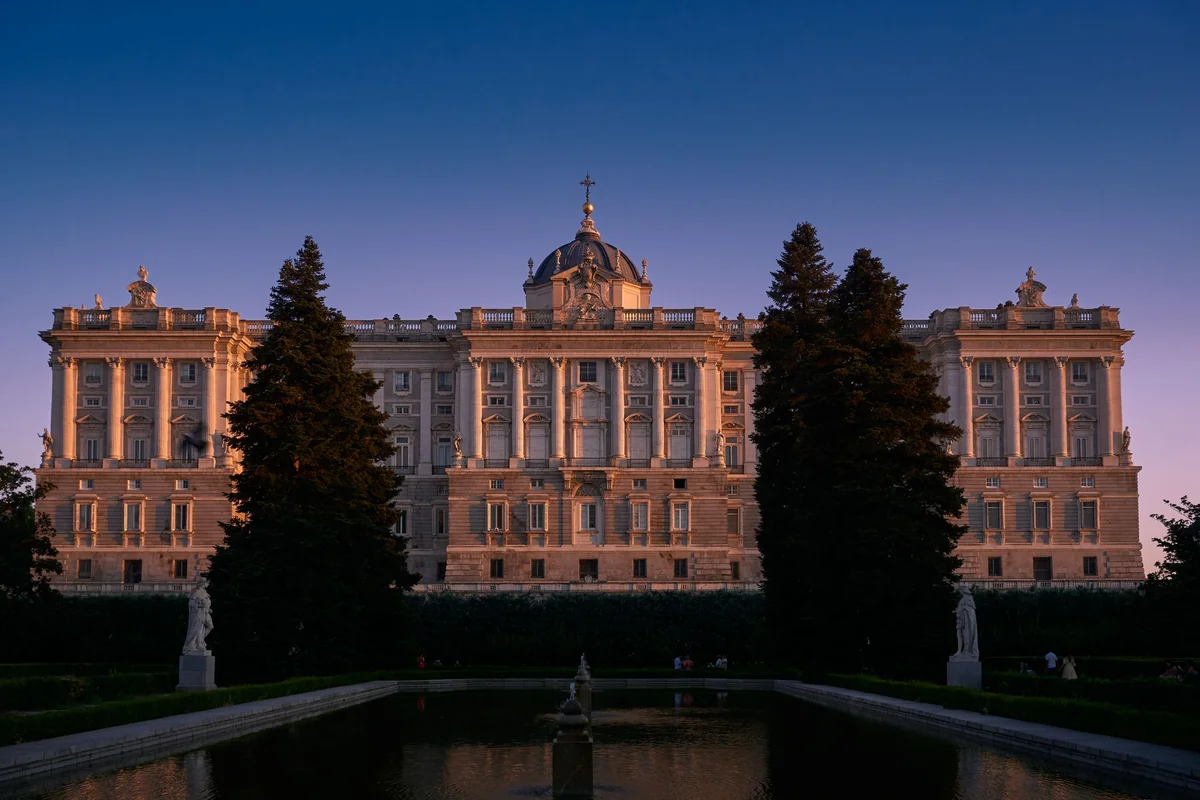
The scene takes place in a large, high-ceilinged room of the old Alcazar palace in Madrid. According to Antonio Palomino, who wrote about Spanish painters in 1724, it was painted in the Cuarto del Principe, the very room it depicts. The old Alcazar burned down in 1734, and today’s Royal Palace stands on its site.
The figures in the room
At the centre stands the Infanta Margarita, the young daughter of Philip IV and Mariana of Austria. Two maids of honour, the meninas who give the painting its name, attend her: Maria Agustina Sarmiento kneels to offer her a drink, and Isabel de Velasco leans towards her from the other side.
To the right are Mari Barbola and Nicolasito Pertusato, two members of the court, with Nicolasito playfully resting his foot on a large, sleepy mastiff. Behind them, the lady-in-waiting Marcela de Ulloa talks with an attendant. In the open doorway at the back, the chamberlain Jose Nieto pauses on the steps, half in and half out of the light.
The painter and the mirror
On the left, Velazquez himself stands before a huge canvas, brush in hand, looking straight out at us. On the back wall hangs a mirror, and in it we see the faint reflections of the king and queen. They seem to be standing exactly where the viewer stands, and the whole group appears to have paused because the royal couple has just walked in.
That small mirror changes everything. Are we looking at the scene through the eyes of the king and queen? Is Velazquez painting their portrait, or the very picture we are looking at? The painting never answers.
Why Las Meninas by Velazquez Feels So Alive
The Prado describes Las Meninas as one of the most convincing spaces ever painted in Western art. Velazquez built it not only with the lines of perspective but also with what painters call aerial perspective, softening edges and colours as the room recedes into shadow. Light enters from several sources, including the windows on the right and the bright doorway at the back, and each one helps to model the space.
Look closely and much of the brushwork dissolves. Sleeves, ribbons and hair are suggested with quick, loose strokes that only come together at a distance, one reason later painters saw Velazquez as a forerunner.
A Portrait That Wants to Be More
On one level Las Meninas is a group portrait of real, identifiable people doing understandable things. But the Prado notes that it carries many other meanings. Some scholars read it as a political image about the royal status of the Infanta. Others focus on the painter’s own presence and on the paintings hanging high on the back wall, which turn the picture into a statement about the art of painting itself.
Velazquez spent his career arguing that painting was a noble, intellectual art rather than a manual trade. Placing himself at work in the company of the royal family, in a picture made for the king, was a bold way of making that case. On his chest you can see the red cross of the Order of Santiago, a knighthood he received only in 1659, three years after the date of the painting. It was added later, a final mark of the status he had worked so hard to win.
From palace room to museum
Las Meninas was not painted for public view. It hung in the king’s private rooms, and later royal inventories describe it simply as a portrait of the Infanta with her ladies, attendants and a dwarf, with Velazquez painting himself at work. It survived the 1734 fire, passed to the new Royal Palace and entered the Prado, which opened in 1819. The title by which we know it became standard only in the nineteenth century.
Artists and Thinkers Who Answered Back
Few paintings have provoked so many replies. Francisco de Goya made etchings after works by Velazquez in the late 1770s, and the older master’s influence runs through his royal portraits. You can follow that thread in our guide to Goya’s Black Paintings at the Prado, which hang only a short walk from Velazquez.
In 1957 Pablo Picasso shut himself away and produced a long series of variations on Las Meninas, breaking the room into flat planes and bright colour. The series is now in the Museu Picasso in Barcelona. The French philosopher Michel Foucault opened his 1966 book The Order of Things with a famous discussion of the painting and its mirror.
How to See Las Meninas at the Prado
Las Meninas hangs in Room 12 of the Villanueva Building, at the heart of the museum’s Velazquez galleries. It is large, more than three metres tall, so step back as well as forward: the illusion of space works best from a distance, while the brushwork rewards a closer look.
- Opening hours: Monday to Saturday 10:00 to 20:00, and Sundays and public holidays 10:00 to 19:00. Last entry is 30 minutes before closing.
- Tickets: general admission is 15 euros, with a reduced rate of 7.50 euros for eligible visitors.
- Free entry: the collection is free during the last two hours before closing each day, although queues can be long.
- Closed: 1 January, 1 May and 25 December, with shorter hours on 6 January and 24 and 31 December.
Opening times and prices can change, so check the museum’s own page for Las Meninas at the Museo del Prado before you go.
Tips for your visit
- See the neighbouring rooms first. Velazquez’s royal portraits and The Spinners help you understand his style before you reach the masterpiece.
- Find the mirror, then find yourself. Stand where the king and queen would have stood and notice how many eyes in the painting meet yours.
Frequently Asked Questions
When was Las Meninas painted?
Velazquez painted it in 1656, during the reign of Philip IV, in a room of the old Alcazar palace in Madrid.
Who is reflected in the mirror in Las Meninas?
The mirror on the back wall shows King Philip IV and Queen Mariana of Austria, the parents of the Infanta Margarita, who seem to be watching the scene from the viewer’s position.
Where is Las Meninas displayed?
It hangs in Room 12 of the Villanueva Building at the Museo del Prado in Madrid.
Can I see Las Meninas for free?
Yes. The Prado offers free entry to its collection during the last two hours before closing every day, so you can see Las Meninas without a ticket if you are happy to queue.